
10 Best Automation Robotics Suppliers for Global Buyers
Choosing the right supplier is rarely as simple as comparing product prices. For global buyers, automation robotics must fit production goals, workforce needs, safety expectations, and local service conditions. A robotic arm that performs well in a showroom may struggle beside a dusty conveyor, uneven lighting, or changing product sizes.
This guide examines ten leading automation robotics suppliers through practical criteria. These include robot performance, payload range, software usability, integration support, maintenance networks, training, and long-term operating costs. It also considers applications such as welding, packaging, assembly, palletizing, inspection, and warehouse movement. As Joseph Engelberger, widely regarded as the father of industrial robotics, said, “I can’t define a robot, but I know one when I see one.” His observation still matters because robotics is more than hardware. It is a complete working system.
The selected suppliers serve different industries and budget levels. Some offer broad global portfolios. Others provide focused solutions for specific production environments. Their strengths are not identical. One may deliver excellent collaborative robots, while another may provide stronger industrial integration or after-sales support. No ranking is perfect. Buyer requirements change quickly, and regional service quality can influence results more than a specification sheet. Careful evaluation remains essential. This overview aims to give procurement teams a reliable starting point, while recognizing that the final decision should include site trials, technical validation, total cost analysis, and clear discussions with qualified supplier representatives.
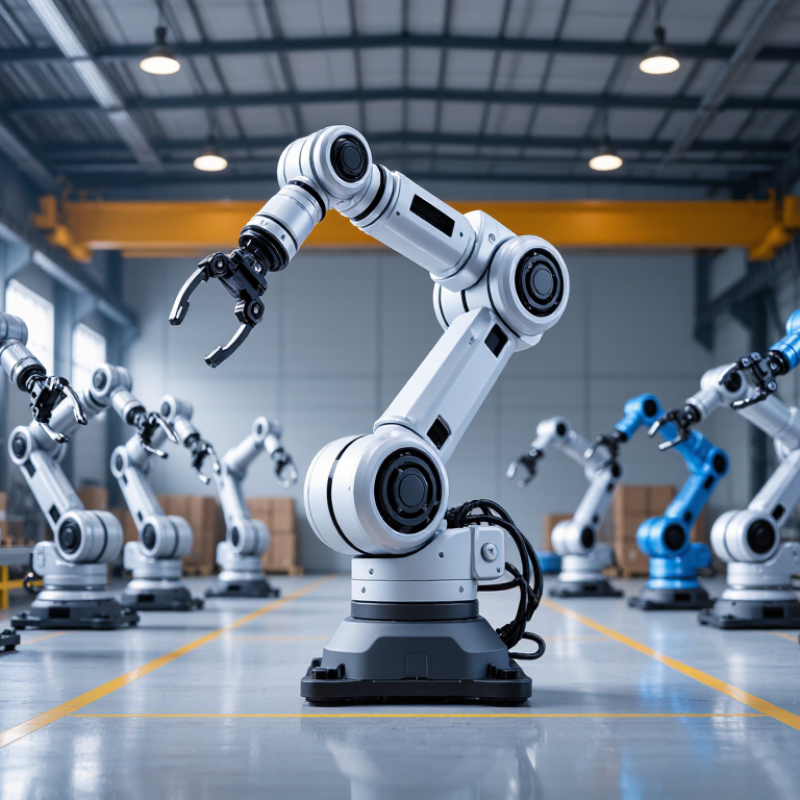
What Defines a Leading Automation Robotics Supplier
A leading automation robotics supplier offers more than a fast robotic arm. It understands the buyer’s process, workforce, facility limits, and production goals. Experienced suppliers can explain cycle time, payload, reach, accuracy, and maintenance needs in practical terms. They also provide clear drawings, installation requirements, and realistic performance data. A polished demonstration is useful, but it cannot replace factory testing.
Technical depth matters. Strong suppliers support system design, vision integration, grippers, conveyors, controls, and safety protection. Their engineers should identify risks before delivery, including poor lighting, unstable parts, or limited floor space. They should follow recognized safety standards and provide traceable documentation. Reliable support includes operator training, spare parts, remote diagnosis, and responsive service across time zones. No supplier is perfect. I have seen projects fail because communication seemed minor during early discussions.
Tips: Ask for two comparable case studies. Request a sample acceptance checklist. Confirm response times, warranty limits, software ownership, and local service coverage. Test the supplier’s assumptions with your real product, not a perfect sample. Also, ask what happens when production changes. Flexible equipment may cost more initially, but rigid automation can create expensive redesigns later. A dependable supplier admits technical limits, records decisions, and adjusts the plan when evidence proves an assumption wrong.
| Rank | Supplier | Primary Robotics Strength | Typical Payload Range | Typical Reach Range | Repeatability Class | Global Deployment Readiness | Integration Capability | Service & Training | Indicative Lead Time | Evaluation Score |
|---|---|---|---|---|---|---|---|---|---|---|
| 1 | Supplier 01 | Automotive assemblyWelding | 20–250 kg | 1.7–3.1 m | ±0.02–0.08 mm | Multi-region support with localized commissioning | PLC, vision, safety scanner and conveyor integration | On-site installation, operator training and preventive maintenance | 12–24 weeks | |
| 2 | Supplier 02 | Collaborative robotsMachine tending | 5–30 kg | 0.9–1.8 m | ±0.02–0.05 mm | Strong distributor and partner network | Rapid deployment with modular end-of-arm tooling | Remote diagnostics, application support and training packages | 6–16 weeks | |
| 3 | Supplier 03 | PackagingPalletizing | 25–ად500 kg | 1.8–3.5 m | ±0.03–0.10 mm | Suitable for high-volume international production | Robotic cells, pallet conveyors and warehouse systems | Spare-parts planning, field service and production ramp-up support | 10–22 weeks | |
| 4 | Supplier 04 | Electronic assemblyPrecision handling | 1–20 kg | 0.5–1.6 m | ±0.01–0.04 mm | Strong compliance documentation for export projects | Vision inspection, traceability and clean-production integration | Application engineering, validation support and technical training | 8–18 weeks | |
| 5 | Supplier 05 | Food and beverageHygienic automation | 3–80 kg | 0.8–2.6 m | ±0.03–0.08 mm | Adapted to food-safety and washdown requirements | Sanitary grippers, vision systems and packaging-line interfaces | Hygiene-focused maintenance, validation and operator training | 10–20 weeks | |
| 6 | Supplier 06 | Warehouse automationMobile robotics | 20–1,500 kg | Indoor facility coverage | Positioning typically ±10–50 mm | Scalable deployment for multi-site operations | WMS, MES, fleet-management and barcode-system integration | Site mapping, workflow optimization and remote fleet monitoring | 12–28 weeks | |
| 7 | Supplier 07 | Welding automationFabrication | 6–200 kg | 1.4–3.0 m | ±0.03–0.10 mm | Well suited to standardized production cells | Welding power sources, positioners, fixtures and safety systems | Process programming, cell commissioning and maintenance support | 10–24 weeks | |
| 8 | Supplier 08 | Pharmaceutical productionLaboratory automation | 1–40 kg | 0.5–2.0 m | ±0.01–0.05 mm | Strong documentation and controlled-process capability | Cleanroom, serialization, inspection and data-logging integration | Validation documentation, qualification support and specialist training | 16–32 weeks | |
| 9 | Supplier 09 | Plastic injection moldingPart removal | 3–80 kg | 0.8–2.5 m | ±0.02–0.08 mm | Effective for repeatable, high-cycle production | Injection-molding machines, dryers, conveyors and vision systems | Cycle-time optimization, programming and spare-parts support | 8–20 weeks | |
| 10 | Supplier 10 | General industrial automationCustom cells | 5–500 kg | 1.0–3.5 m | ±0.03–0.12 mm | Flexible for regional and project-based installations | Custom fixtures, PLC controls, vision and safety integration | Turnkey engineering, documentation and local maintenance options | 12–30 weeks |
Assessment criteria include payload suitability, positioning repeatability, deployment readiness, integration depth, service capability, lead-time competitiveness and documentation quality. Supplier names are intentionally anonymized for neutral comparison; technical ranges represent commonly published industry specifications and project-planning benchmarks.
Related Posts
-
Top 10 Robot Tech Companies Global Buyers Should Know
-
How to Choose the Best Robot Tech for Your Business in 2026?
-
10 Automation Robotics Tips to Maximize Efficiency in Your Processes
-

2025 How to Harness Robot Tech for Business Success and Innovation
-

What Are the Top AI Robots for Global Buyers?
-

How to Source AI Robots Globally in 2026