How to Choose the Best Robot Tech for Your Business in 2026?
Choosing the best robot tech for your business in 2026 requires more than comparing glossy product brochures. A warehouse robot may move 500 boxes per hour, yet still fail if its software cannot connect with your inventory system. A service robot may impress customers, but maintenance delays can quickly damage trust. Real business value depends on fit, safety, measurable performance, and long-term support.
Begin with the work itself. Observe where employees lose time, repeat awkward movements, or face avoidable risks. Record cycle times, error rates, floor space, and training needs. Then compare robotic options against those facts. Ask vendors for demonstrations using your products, not sample objects. Request uptime records, integration details, cybersecurity controls, and clear service agreements. Independent testing and feedback from current users can reveal weaknesses that sales presentations hide.
No system is perfect. Small businesses may underestimate installation changes. Larger firms may overestimate automation savings. I have seen promising pilots struggle because workers received too little training and managers tracked the wrong results. That lesson matters. A reliable decision includes employee input, realistic costs, human oversight, and a staged rollout. Start with one measurable process. Review the evidence. Adjust when reality disagrees with the plan. In 2026, the strongest investment will not always be the most advanced machine. It will be the robot tech that works safely, earns user confidence, and supports your business goals over time.
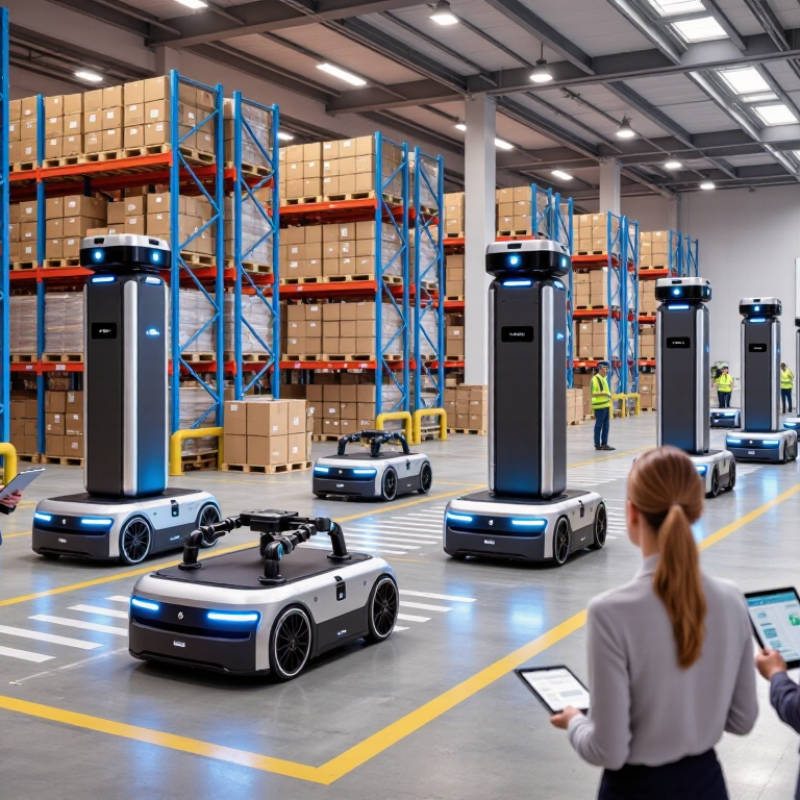
Define Your Business Needs and Automation Goals
Choosing robot technology in 2026 should begin with business needs, not impressive specifications.
Define the task, the bottleneck, and the desired outcome. Is the goal faster picking, safer material handling, fewer errors, or steadier production? The International Federation of Robotics reported 541,302 industrial robots were installed worldwide in 2023. That growth signals opportunity, but adoption alone does not prove value. Measure current cycle time, labor hours, downtime, defect rates, and safety incidents before selecting equipment.
Tips:
Build a one-page automation brief. Include the work area, load weight, operating hours, required accuracy, worker interaction, and available floor space. Set one financial target and one operational target. For example, reduce order handling time by 20% while maintaining a 98% accuracy rate. Then test the robot in a limited workflow. Small pilots reveal hidden issues, such as poor lighting, uneven floors, or difficult maintenance access.
A useful roadmap also considers people. The World Economic Forum’s Future of Jobs Report 2025 found that 58% of employers expect robotics and autonomous systems to transform business by 2030. Training should therefore be part of the design, not an afterthought. Operators need clear controls, fault procedures, and practical maintenance skills. A perfect business case is rare. Some tasks may remain manual. That is acceptable. The strongest choice often improves one painful process instead of automating everything at once. Review results after 30, 60, and 90 days, and revise the plan when evidence disagrees with expectations.
Identify the Robot Technologies That Match Your Operations
Choosing robot technology starts with your operation, not the newest machine. Map each task by load, cycle time, accuracy, workspace, and human involvement. A pallet-moving system suits predictable routes and repeated loads. A vision-guided arm may fit variable picking, but only when lighting and product presentation remain stable. Measure reality on the floor. Dust, wet surfaces, narrow aisles, and frequent changeovers can defeat an attractive demonstration.
Industry data shows why careful matching matters. The International Federation of Robotics reported 541,302 industrial robots installed worldwide in 2023, with 4.28 million operating globally in World Robotics 2024. Its World Robotics 2024 service-robot report recorded almost 205,000 professional service robots sold in 2023. These figures show adoption, not automatic suitability. A high installation rate does not prove your process is ready.
Start with a small workflow audit. Record ten shifts, including jams and manual overrides. Then compare technologies against measurable outcomes, such as picks per hour, error rates, recovery time, and payback. Autonomous mobile systems need dependable maps and clear traffic rules. Collaborative systems need realistic cycle-time tests, not showroom demonstrations. Integration deserves equal attention. Confirm data access, maintenance skills, spare-part availability, and safe restart procedures. I have seen teams overvalue speed while ignoring exception handling. That mistake is expensive. A slower system with simple recovery may deliver more usable output. Recheck the assumptions after a pilot, because the first model will probably be wrong.
How to Choose the Best Robot Tech for Your Business in 2026?
Identify the robot technologies that match your operations by comparing workflow, payload, navigation, deployment effort, and expected business value.
| Robot Technology | Best-Match Operations | Typical Payload or Capacity | Movement and Navigation | Typical Operating Speed | Deployment Effort | Primary Value Driver | Best Selection Signal |
|---|---|---|---|---|---|---|---|
| Autonomous Mobile Robot (AMR) | Material transport Warehouse replenishment Goods-to-person picking | Commonly 100–1,500 kg, depending on the platform and carrier design. | Uses onboard mapping, cameras, lidar, or other sensors to plan routes and avoid obstacles dynamically. | Usually about 1–2 m/s in indoor facilities; practical speed is reduced around people and intersections. | Medium Requires site mapping, traffic rules, charging points, and workflow integration. |
Reduces walking, forklift travel, and repetitive internal transport. | Routes change frequently or the facility needs flexible automation without fixed tracks. |
| Automated Guided Vehicle (AGV) | Fixed-route transport Line-side delivery Pallet movement | Commonly 500–2,000+ kg for pallet and tugger applications. | Follows predefined paths using magnetic tape, reflectors, wires, QR markers, or fixed navigation infrastructure. | Often about 0.5–1.5 m/s, depending on load, route design, and safety requirements. | Medium to high Best results require stable routes, controlled traffic, and infrastructure planning. |
Provides predictable, repeatable movement with low operator involvement. | Transport routes are repetitive, volumes are stable, and the facility layout changes rarely. |
| Collaborative Robot (Cobot) | Assembly assistance Machine tending Packaging Inspection | Typically 3–20 kg at the wrist; reach is commonly around 0.5–1.3 m. | Uses programmed joint motion, force sensing, safety-rated monitoring, and task-specific end effectors. | Usually slower than conventional industrial robots when operating near people; actual speed depends on risk assessment. | Low to medium Generally easier to redeploy, but tooling, guarding, and safety validation remain necessary. |
Automates repetitive tasks while allowing shared workspaces and frequent product changes. | Work is repetitive but variable, and human operators must remain close to the process. |
| Industrial Articulated Robot | Welding High-volume assembly Palletizing Painting | Approximately 5–500 kg, depending on arm configuration and application. | Six-axis or similar articulated motion with programmed paths, fixtures, sensors, and dedicated work cells. | High joint speeds are possible, but effective cycle time depends on payload, reach, tooling, and safety limits. | High Usually needs dedicated fixtures, guarding, programming, and process qualification. |
Delivers high repeatability, throughput, and consistent cycle times. | Demand is high and stable, cycle times are measurable, and the process can be standardized. |
| Machine Vision System | Quality inspection Barcode reading Presence checking Dimension verification | Not rated by payload; performance depends on camera resolution, optics, lighting, and processing. | Stationary or robot-mounted cameras analyze images using rule-based or machine-learning methods. | Inspection rates range from a few images per second to high-speed production-line inspection, depending on complexity. | Medium Requires controlled lighting, representative samples, integration, and acceptance testing. |
Improves inspection consistency and creates traceable quality data. | Defects are visually identifiable and manual inspection is slow, inconsistent, or difficult to document. |
| Automated Storage and Retrieval System (AS/RS) | High-density storage Buffering Order sequencing Pallet handling | From tote-level loads of roughly 10–50 kg to pallet loads exceeding 1,000 kg, depending on system type. | Uses fixed aisles, cranes, shuttles, lifts, conveyors, or robotic storage vehicles controlled by warehouse software. | System throughput is commonly measured in storage or retrieval cycles per hour rather than vehicle speed alone. | High Requires structural, software, fire-safety, and material-flow planning. |
Increases storage density, inventory accuracy, and throughput in constrained facilities. | Space is expensive or limited, inventory is standardized, and transaction volume is predictable. |
| Autonomous Inspection Drone | Inventory scanning Large-site inspection Roof and infrastructure checks Thermal surveys | Payload is generally limited to cameras, scanners, thermal sensors, or other lightweight inspection equipment. | Uses indoor positioning, visual navigation, lidar, GPS where available, and predefined inspection missions. | Indoor flight is commonly kept at low speed for safety; outdoor speed depends on aircraft class and local regulations. | Medium to high Needs airspace controls, safety procedures, mission validation, and data-management workflows. |
Reduces manual inspection time and improves access to elevated or hazardous areas. | Assets are large, elevated, hazardous, or difficult to inspect safely with conventional methods. |
| Robotic Process Automation (RPA) | Data entry Invoice processing System reconciliation Report generation | Not rated by physical payload; capacity depends on transaction volume, software licenses, and system availability. | Operates through software interfaces, application programming interfaces, databases, and defined digital workflows. | Can process transactions continuously, subject to application response times and exception handling. | Low to medium Best suited to stable, rules-based processes with structured digital inputs. |
Reduces repetitive administrative work and improves process consistency. | Tasks are high-volume, rules-based, digital, and currently performed through repeatable screen actions. |
Evaluate Performance, Integration, Safety, and Scalability
How to Choose the Best Robot Tech for Your Business in 2026?
Performance should be measured on your actual production floor, not in a polished demonstration. Track cycle time, repeatability, payload stability, energy use, and error recovery. A robot completing 30 cycles per minute may still fail your process if it needs frequent resets. Run a limited pilot with real materials, changing temperatures, and normal operator habits. Record results for several weeks. Short tests can hide expensive weaknesses.
Integration often decides whether automation creates value or daily frustration. Check communication protocols, software access, sensor compatibility, and data export options. Your technical team should connect the system without rebuilding the entire control architecture. Maintenance matters too. Clear diagnostics and accessible replacement parts can reduce downtime. They are easy to overlook.
Safety requires more than emergency stops and warning labels. Review movement zones, human interaction points, training procedures, and failure behavior. Ask an independent safety professional to assess the installation before full deployment. Document every test. Scalability deserves equal attention. Can the system handle higher volumes, new tools, or another production cell? Avoid paying for maximum capacity before proving demand. A modular design may cost more initially, but it can limit future disruption. Still, modularity is not automatically better. Extra interfaces can create new failure points. No scorecard is perfect. Recheck your assumptions after the pilot.
How to Choose the Best Robot Tech for Your Business in 2026?
Evaluate performance, integration, safety, and scalability with a balanced decision framework.
The suggested weighting prioritizes measurable productivity, compatibility with existing systems, protection of people and equipment, and the ability to expand deployments over time. Use these percentages as a practical starting point, then adjust them to match your operational risks and growth plans.
Compare Total Costs, Vendors, and Implementation Requirements
How to Choose the Best Robot Tech for Your Business in 2026?
Robot prices rarely show the full investment. Compare purchase costs with integration, safety upgrades, software, training, maintenance, energy, and production downtime. A useful vendor comparison uses one identical workload, such as moving 600 cartons per hour across a twelve-meter line. Request five-year total cost models, not attractive first-year quotes. Include spare parts and technician response times. Small assumptions can distort the result.
The International Federation of Robotics reported 541,302 industrial robot installations worldwide in 2023. That scale suggests stronger competition, but also more technical choices. Compare payload, reach, cycle-time evidence, programming effort, and compatibility with existing equipment. Ask vendors for customer references with similar materials and shift patterns. A polished demonstration proves little. Your uneven floor may expose the real problem.
Implementation requirements often decide success. Deloitte’s 2024 Smart Manufacturing and Operations Survey found that 92% of surveyed leaders viewed smart manufacturing as important for future competitiveness. Yet readiness varies sharply between factories. Check network capacity, operator skills, cybersecurity controls, floor space, and safety validation before signing. Pilot before scaling. That changes everything. I would also reserve 15% of the project budget for unknowns, although this is a practical estimate, not an industry rule. A spreadsheet can still lie. Track actual downtime, training hours, and rejected units during the pilot, then revise the business case.
Test, Select, and Scale the Right Robot Solution
How to Choose the Best Robot Tech for Your Business in 2026?
Test, Select, and Scale the Right Robot Solution
Choosing robot technology in 2026 should begin with a measurable business problem. Do not buy equipment because it looks advanced. Define the task, required cycle time, acceptable error rate, and workplace conditions. A warehouse may need reliable navigation, while a workshop may need precise handling. Record current labor hours, delays, maintenance costs, and safety incidents. These figures create a practical baseline for comparison.
Test small. A controlled pilot often reveals issues that sales demonstrations hide. Place the robot in one real work area for two to four weeks. Measure output during busy periods, not only during quiet shifts. Check setup time, recovery after errors, operator training, and integration with existing systems. Ask employees what feels difficult. Their feedback may expose risks that technical reports miss. Our first pilot improved speed but created awkward handoffs. We nearly ignored that problem.
Tips: Use a written scorecard. Include performance, safety, data protection, maintenance, and total ownership cost. Request clear evidence from suppliers, including test conditions and failure limits. Keep a manual backup during early trials. It feels inefficient, but it protects operations. Review results with operators, engineers, and finance staff before scaling. If the robot succeeds in one area, expand gradually. A wider rollout should follow stable performance, documented procedures, and trained support staff. Even then, reassess after three months. Business needs change faster than expected.
Related Posts
-
How to Choose the Best Robot Tech for Your Business Needs
-

2025 How to Harness Robot Tech for Business Success and Innovation
-

What Are the Top AI Robots for Global Buyers?
-

How to Source AI Robots Globally in 2026
-

10 Best Robotic Manufacturing Techniques Revolutionizing Industry?
-
Top Benefits of AGV Automation for Global Supply Chain Efficiency?