What Are the Top AI Robots for Global Buyers?

What Are the Top AI Robots for Global Buyers? This question now reaches far beyond science fiction. It concerns warehouse vehicles, collaborative arms, inspection machines, hospital assistants, and autonomous mobile robots. Buyers need measurable value, not impressive demonstrations. A robot moving boxes across a polished showroom may fail on a crowded factory floor.

The International Federation of Robotics reported 542,000 industrial robots installed worldwide in 2023. Its World Robotics 2024 report also recorded about 4.28 million industrial robots operating globally. Professional service robots are expanding too. IFR reported approximately 205,000 units sold in 2023, including logistics and hospitality applications. These figures show strong demand, but they do not identify one universal winner. Factory lighting, payload, navigation, software integration, maintenance, and worker training can change the decision completely.

Marina Bill, President of the International Federation of Robotics, said, “The global robot density has more than doubled in just six years.” This observation gives buyers useful context. Adoption is accelerating. Yet speed can create careless purchasing. The Stanford AI Index and IFR reports both suggest that capability and deployment are developing together, but reliability still depends on real operating conditions. A strong comparison should therefore examine safety certifications, uptime evidence, cybersecurity controls, energy use, total ownership cost, and local technical support. Test the robot first. Watch it handle a wet floor, a misplaced carton, or a sudden human movement. Some product claims remain difficult to verify. That uncertainty deserves honest attention. The following guide evaluates leading ai robots for global buyers through practical performance, documented evidence, and responsible deployment needs.

What Are the Top AI Robots for Global Buyers?

What Are AI Robots and How Are They Classified?

AI robots are machines that sense, decide, and act with software-based intelligence. The term is useful, but not fully precise. ISO 8373 separates robots by industrial and service applications, while AI describes their decision-making capability. In practice, global buyers should classify them by purpose, movement, autonomy, and working environment.

Industrial robots handle welding, assembly, or palletizing.
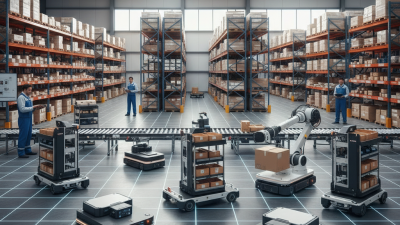
Mobile robots transport goods across warehouses.
Service robots support inspection, cleaning, healthcare, or hospitality.

Humanoid systems form an emerging category, yet their commercial maturity remains uneven.

Market data shows why this distinction matters. The International Federation of Robotics reported 541,302 industrial robot installations worldwide in 2023. The global operational stock exceeded 4.28 million units. Its World Robotics 2024 service report also recorded nearly 200,000 professional service robots sold in 2023.

These figures do not mean every robot uses advanced AI. Some systems repeat fixed motions with limited learning. Others combine cameras, language models, navigation, and adaptive control. The boundary remains blurry. Buyers should question impressive demonstrations and request measurable performance data.

Tips: Match classification to the job, not the marketing label. Ask about payload, accuracy, battery life, safety functions, integration standards, and failure rates. Request test results under real lighting, floor conditions, and workload. The AI Index Report 2025 also notes rapid growth in AI capability, but capability does not guarantee dependable physical performance. A careful pilot may reveal problems that a polished presentation hides.

Which AI Robot Types Best Match Different Buyer Needs?

AI robots serve different buyer needs, so the best choice depends on the working environment. Home-service robots suit buyers who need floor cleaning, basic monitoring, or routine reminders. They should navigate furniture safely and operate quietly during daily use. A simple interface matters for older users and busy families. However, voice control may struggle with accents, background noise, or mixed-language homes.

Education and social robots fit schools, libraries, and care settings. They can support language practice, guided exercises, and interactive lessons. Buyers should check whether the system encourages real human interaction rather than replacing it. Industrial and logistics robots are better for warehouses, factories, and repetitive transport tasks. They need accurate sensors, stable software, clear emergency controls, and reliable performance across long shifts. A robot that looks impressive in a demonstration may perform poorly on uneven floors.

Tips: Match the robot to one measurable task first. Ask for local service support, training materials, warranty terms, and software update policies. Review data handling carefully, especially when cameras or microphones are used. Request a live trial with real obstacles, lighting, and noise from your workplace. Also compare repair time, battery replacement, and integration costs. The cheapest purchase can become expensive after installation. Some buyers focus too heavily on intelligent features and overlook maintenance. That mistake is common. Experiences from pilot testing should guide the final decision, even when they challenge the original buying plan.

What Are the Top AI Robots for Global Buyers?

This comparison uses a typical buyer-fit index from 1 to 5, based on the common capabilities and deployment requirements of major AI robot categories. Industrial robots are strongest for precision and warehouse automation, while mobile, agricultural, and home-service robots are better suited to navigation, outdoor work, or daily assistance.

What Features Should Global Buyers Compare Before Purchasing?

Global buyers should compare AI robots by measurable performance, not polished demonstrations.
The International Federation of Robotics reported 541,302 industrial robot installations worldwide in 2023. That scale makes compatibility and serviceability important purchasing factors. Check payload, reach, cycle time, navigation accuracy, and performance in dust, heat, or uneven floors. A robot that succeeds in a showroom may struggle beside a loading dock.

Autonomy needs careful testing. Ask whether the system handles unexpected objects, human movement, weak lighting, and network interruptions. Review its sensor coverage, decision logs, update policy, and cybersecurity controls. Safety documentation should align with relevant ISO 10218 and ISO/TS 15066 requirements. The IFR also recorded about 205,000 professional service robots sold in 2023, showing rapid adoption but uneven maturity. More deployment does not guarantee reliability. It is easy to underestimate maintenance.

Tips: Request a live site trial lasting several weeks. Measure completed tasks, downtime, energy use, and operator training hours. Compare the full five-year cost, including software, batteries, integration, repairs, and data storage. Confirm local technical support and spare-part availability. Ask for references from similar environments, not impressive laboratories. A useful warning sign is vague accuracy data. I would also test failure recovery personally; marketing rarely shows the third attempt.

Which AI Robots Lead in Homes, Business, Industry, and Education?

What Are the Top AI Robots for Global Buyers?

For homes, autonomous cleaning robots lead consumer adoption. The International Federation of Robotics reported 11.6 million consumer service robots sold in 2023. Most handled routine floor care, which shows practical value matters more than human-like design. In homes, the strongest systems map rooms, avoid furniture, and return to charging stations independently. However, privacy controls remain uneven. Buyers should inspect data storage, microphone settings, and offline functions before purchase.

Business buyers usually prioritize logistics, cleaning, reception, and inventory support. The IFR recorded nearly 205,000 professional service robots sold in 2023. Transport and logistics represented the largest application group. In warehouses, mobile robots can move bins across long aisles and reduce repetitive walking. Yet, deployment may fail without reliable floor markings, safe pedestrian routes, and trained staff. That lesson is often underestimated.

Industrial leaders combine robotic arms, machine vision, and mobile platforms. The IFR counted 541,302 new industrial robot installations in 2023, with global operating stock reaching about 4.28 million units. These systems support welding, inspection, packaging, and component handling. Education needs a different standard. Programmable robots, telepresence units, and classroom assistants lead because teachers can control their scope. UNESCO’s 2023 Global Education Monitoring Report warns that technology requires evidence, access, and human oversight. A robot can engage students briefly. It cannot replace a skilled teacher.

What Are the Top AI Robots for Global Buyers? - Which AI Robots Lead in Homes, Business, Industry, and Education?

Priority AI Robot Category Main Market Typical Tasks Core AI Capabilities Human Interaction Typical Autonomy Deployment Readiness Best Buyer Profile Important Limitations
1 Autonomous Mobile Robots Industry, warehouses, hospitals, offices Material transport, inventory movement, internal delivery, route-based inspection Mapping, localization, obstacle avoidance, fleet optimization, route planning Medium High in mapped areas; human intervention is required for blocked or unusual routes High Organizations seeking measurable transport efficiency and reduced repetitive walking Requires suitable floor layouts, access rules, charging infrastructure, and safety procedures
2 Collaborative Robotic Arms Small and medium manufacturing, laboratories Pick-and-place, assembly, machine tending, inspection, packaging Vision-based recognition, force control, trajectory planning, anomaly detection High High for structured tasks; programming and supervision remain necessary High Factories that need flexible automation without fully separating workers from machines Tooling, guarding assessments, risk analysis, and process-specific programming are required
3 AI Inspection and Mobile Vision Robots Industry, utilities, construction, facilities Thermal inspection, visual quality checks, meter reading, asset monitoring Computer vision, thermal-image analysis, defect classification, digital reporting Low to medium Medium to high in predefined inspection zones High Asset owners that need repeatable inspection records and early fault detection AI findings should be verified by qualified personnel before safety or maintenance decisions
4 Service and Hospitality Robots Hotels, restaurants, retail, healthcare facilities Indoor delivery, room service, guided navigation, reception support, cleaning Speech recognition, semantic navigation, person detection, task scheduling High Medium; staff support is needed for crowded or changing environments Medium to high Businesses wanting labor support, consistent service routines, and visible innovation Performance can decline around stairs, narrow spaces, crowds, spills, and frequent layout changes
5 Domestic Cleaning Robots Homes, small offices Floor vacuuming, mopping, scheduled cleaning, basic obstacle avoidance Room mapping, navigation, surface detection, scheduling, object avoidance Low High on accessible floors; manual cleaning remains necessary for edges and clutter Very high Households and offices seeking routine cleaning with limited supervision Cables, thresholds, wet areas, stairs, small objects, and heavily cluttered rooms reduce effectiveness
6 Social and Companion Robots Homes, eldercare, customer-facing environments Conversation, reminders, entertainment, basic wellness check-ins, information access Natural-language interaction, speech synthesis, facial or object recognition, personalization Very high Low to medium; responses may require human review in sensitive situations Medium Users prioritizing communication, reminders, accessibility, or companionship Not a substitute for medical care, emergency response, professional caregiving, or human relationships
7 Educational Social Robots Schools, universities, language-learning centers Language practice, coding demonstrations, interactive lessons, STEM experiments Dialogue management, speech feedback, adaptive exercises, visual demonstration, data logging Very high Medium; teachers remain responsible for learning design and assessment Medium Institutions seeking engaging, repeatable practice and accessible learning activities Requires age-appropriate content, privacy controls, teacher supervision, and inclusive lesson planning
8 Agricultural Field Robots Farms, greenhouses, horticulture Crop monitoring, targeted weeding, selective harvesting, soil and plant data collection Plant recognition, geospatial navigation, yield estimation, selective action planning Low to medium Medium; terrain, weather, crop variation, and seasonal conditions affect autonomy Medium Commercial growers seeking precision agriculture and reduced chemical or labor input Outdoor reliability, regulatory approval, crop diversity, mud, dust, and weather remain major challenges
9 Quadruped Inspection Robots Energy, construction, mining, public safety Stair traversal, remote inspection, hazardous-area observation, site mapping Terrain perception, autonomous navigation, remote teleoperation, sensor fusion Medium Medium; often combines autonomous navigation with human teleoperation Medium to high Organizations that need remote sensing in uneven, dangerous, or inaccessible locations Battery duration, communication range, payload limits, terrain hazards, and operating permissions must be evaluated
10 Humanoid General-Purpose Robots Warehouses, manufacturing, research, public demonstrations General object handling, basic logistics, workstation assistance, demonstration tasks Multimodal perception, imitation learning, task planning, bipedal manipulation High Low to medium outside controlled demonstrations; close supervision is commonly required Emerging Early adopters and research-led organizations testing flexible automation High integration cost, uncertain reliability across tasks, safety validation, and limited large-scale field evidence
Evaluation basis: Rankings reflect current practical deployment maturity, task repeatability, safety requirements, and suitability for international buyers. “Typical autonomy” describes expected operation in an appropriately prepared environment, not guaranteed unsupervised operation.

How Can International Buyers Evaluate Costs, Safety, and Support?

International buyers should compare AI robots by task, not by futuristic claims.

Mobile platforms suit warehouses, while collaborative arms fit controlled assembly cells. The International Federation of Robotics reported 541,302 industrial robot installations in 2023. Its 2024 service-robot report recorded nearly 205,000 professional units sold that year. These figures show a mature market, but not universal suitability.

Calculate total cost of ownership over five years.

Include installation, grippers, sensors, software subscriptions, energy, training, spare parts, and downtime. A low purchase price can hide expensive integration work. Ask for measured cycle times under your materials and floor conditions. Request warranty limits and a written service response time. Local technicians matter when one stopped robot delays an entire shift.

Safety evidence should be practical.

Check risk assessments, emergency stops, speed limits, guarding, and collision testing. ISO 10218 supports industrial robot safety, while ISO 13482 addresses personal-care robot risks. NIST’s AI Risk Management Framework also encourages documented testing, monitoring, and human oversight.

Do not accept “self-learning” as a safety argument. It is not one.

Require logs, software-update controls, cybersecurity procedures, and clear responsibility for failures. The best pilot may be modest: one robot, one workflow, eight weeks of real operation. I would still challenge the results, because a polished demonstration rarely reveals dust, night shifts, or inconsistent loads.