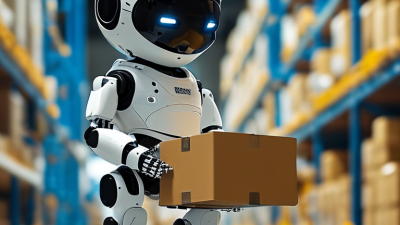
Top 10 AI Robots for Businesses to Buy in 2026?
Choosing from the Top 10 AI Robots for Businesses to Buy in 2026 starts with a practical question: what work should the machine perform? A robot moving cartons through a warehouse solves a different problem from one inspecting welds or assisting hotel guests. The International Federation of Robotics (IFR) reported 541,302 industrial robots installed worldwide in 2023, the second-highest annual total on record. Its World Robotics 2024 report also counted more than 205,000 professional service robots sold that year, up 30 percent from 2022. These figures show momentum, not guaranteed savings for every buyer. That distinction matters.
AI robots can perceive surroundings, respond to changing conditions, and handle tasks that once demanded repeated human direction. Yet a polished demo can hide costly integration work. Ask how the robot performs under dim warehouse lighting, around unexpected obstacles, or during a full shift. Jensen Huang, NVIDIA’s founder and CEO, described the emerging field in 2025: “The next frontier of AI is physical AI.” It is an ambitious direction, but deployment still depends on safety, reliability, maintenance, and a clear business case. Fit matters more.
This guide compares ten business-ready options by use case, capabilities, deployment demands, and likely value. It will consider mobile robots, collaborative arms, humanoids, and other systems, while distinguishing proven products from newer bets. Not every company needs a robot. Some may find that workflow redesign or conventional automation delivers more. That is worth admitting. The right shortlist begins with measurable needs: labor bottlenecks, floor layout, payload, uptime, and support. Then buyers can judge whether an AI robot is a useful coworker—or an expensive distraction.
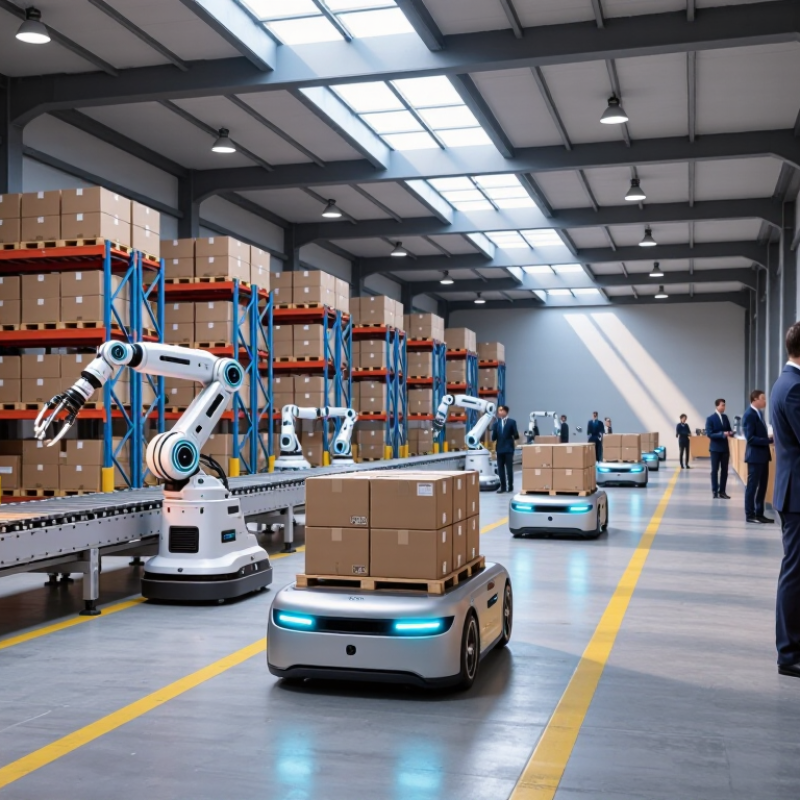
How to Define Business Needs for AI Robot Adoption in 2026
Before comparing AI robots for business in 2026, define the work that needs improvement. Describe one repeatable task, such as moving labeled bins between a stockroom and packing station. Record how often it occurs, how long it takes, and where delays happen. Ask staff what changes during busy shifts. Their answers may challenge the neat workflow on paper.
Set measurable targets before evaluating equipment. A pilot might track completed trips per hour, missed handoffs, staff intervention, and downtime across several shifts. Include setup, maintenance, training, and integration costs—not just purchase price. Check whether the robot can navigate narrow aisles, cross floor transitions, and stop safely around people. Small details matter. Also identify who reviews operating data and handles failures.
Match the technology to the environment, not the sales demonstration. Request a trial using real routes, realistic loads, and ordinary lighting. Compare results with the current process, and ask workers to record awkward moments as well as successes. A short pilot can still mislead if it avoids peak demand or unusual layouts. That is worth admitting. Set clear acceptance thresholds, then revisit them after deployment; business needs change, and early assumptions often do too.
Key Criteria for Evaluating AI Robots for Business Use
Top 10 AI Robots for Businesses to Buy in 2026?
Key Criteria for Evaluating AI Robots for Business Use
A useful evaluation starts with the job, not the robot’s headline features. List the tasks, locations, and hours involved. A warehouse unit might need to move loaded carts across narrow aisles, while a hotel assistant may need to handle frequent guest questions. Start with the task. Ask vendors to demonstrate those exact conditions, including busy periods and unexpected obstacles. A polished showroom demo can hide practical limits.
Check how the robot works with existing systems and people. Can it connect securely to scheduling, inventory, or customer-service tools? Does it stop safely near workers, and can staff take over when automation fails? Review uptime records, maintenance intervals, spare-part access, and response times for technical support. Small details matter. A robot that blocks a doorway during charging can disrupt an entire shift.
Compare total operating costs, not just purchase prices. Include installation, software, training, maintenance, and likely downtime. During a pilot, track task completion, errors, staff interventions, and time saved against a clear baseline. Protect sensitive business data, and ask where it is stored and who can access it. Results may be mixed at first; that is useful evidence, not a reason to hide the rough edges. A short, measured trial is often more trustworthy than confident promises.
Main Types of AI Robots Available to Businesses
Businesses can choose from several AI robot types, each suited to different work. Collaborative arms handle repetitive tasks such as placing small parts into trays. They can assist staff on shared production lines, but still need careful setup and supervision. Autonomous mobile robots move bins across warehouses using mapped routes and onboard sensors. Service robots deliver supplies through offices, hotels, or healthcare facilities. Inspection robots use cameras and sensors to check equipment, pipes, or hard-to-reach areas. Their reports can help teams spot changes, though human review remains important.
Some companies also consider humanoid robots for environments built around human tools and layouts. Their flexibility may sound attractive, but performance can vary widely by task. A narrow-purpose robot may be more reliable and easier to maintain. Costs include more than the purchase price: integration, staff training, downtime, and safety checks all matter. Real workflows are messy. A blocked aisle or poorly labeled item can disrupt a smooth demonstration.
Tips: Start with one repetitive task and measure its current time, error rate, and labor needs. Ask vendors for a live trial using your actual workspace. Check service coverage, software updates, and fallback procedures before committing. Keep a person responsible for reviewing exceptions.
| # | Robot Type | Common Business Tasks | Typical AI and Autonomy | Key Buying Considerations | Commercial Readiness |
|---|---|---|---|---|---|
| 1 | Autonomous mobile robot (AMR) | Moving totes, materials, or parts between workstations, storage areas, and packing zones. | Uses onboard sensors and mapped routes to navigate around people and changing obstacles; fleet software can coordinate multiple units. | Check payload, aisle width, floor conditions, traffic management, elevator integration, and compatibility with warehouse systems. | Established for structured indoor logistics; site preparation and workflow integration are still required. |
| 2 | Autonomous forklift or pallet-moving robot | Transporting pallets, replenishing production lines, and handling repetitive storage or staging moves. | Combines localization, obstacle detection, and navigation; some systems identify pallet positions or align with designated pickup points. | Confirm pallet types, load limits, lift height, safety zones, floor quality, and how the system handles mixed human traffic. | Commercially available for repeatable material-handling routes; complex sites may need layout changes and process validation. |
| 3 | Collaborative robot arm | Machine tending, assembly assistance, screwdriving, dispensing, and simple pick-and-place operations. | Can use vision or force sensing for selected tasks; programmed motion and safety features support work near people when properly assessed. | Evaluate reach, payload, cycle time, end-effectors, part variation, risk assessment, and the cost of integration and guarding. | Widely used in industrial settings; capability depends on the application, tooling, and safety design. |
| 4 | Robotic machine-tending cell | Loading and unloading CNC machines, presses, or other production equipment. | Typically follows programmed routines; vision and part sensing can support variation in part location or orientation. | Check machine interfaces, door and chuck control, part presentation, chip or coolant exposure, and expected production volume. | A mature automation application, especially for repetitive jobs with stable parts and processes. |
| 5 | Autonomous inspection robot | Routine inspection of facilities, utilities, equipment rooms, and industrial sites. | May capture images, thermal readings, acoustic data, or other sensor measurements and flag anomalies for human review. | Verify sensor accuracy, inspection coverage, environmental limits, data storage, cybersecurity, and integration with maintenance systems. | Available for defined inspection routes; automated findings generally require human confirmation and follow-up. |
| 6 | Commercial floor-cleaning robot | Scrubbing, sweeping, or vacuuming large indoor floor areas in offices, retail spaces, and facilities. | Uses mapping and obstacle detection to navigate cleaning routes and avoid many stationary or moving objects. | Compare cleaning width, runtime, water management, floor type, docking needs, noise, and performance in busy areas. | Commercially established for suitable floor plans; staff may still need to handle edges, spills, and crowded spaces. |
| 7 | Inventory-scanning robot | Scanning shelves or storage locations to help identify stock discrepancies and improve inventory visibility. | Can combine mobile navigation with cameras or barcode and RFID readers; recognition depends on label quality and storage conditions. | Check scanning accuracy, shelf and label compatibility, aisle access, inventory-system integration, and data review workflows. | Useful in structured environments; results depend on scan coverage and the quality of source inventory data. |
| 8 | Autonomous delivery or service robot | Transporting meals, supplies, documents, or small items within hotels, hospitals, campuses, and large buildings. | Uses indoor navigation and obstacle avoidance; some units support elevator or door integration and task dispatch software. | Assess route accessibility, elevator interfaces, payload, handoff procedure, privacy, and operation around visitors or patients. | Deployed in defined indoor environments; building infrastructure and human handoffs affect reliability. |
| 9 | Robotic picking and packing system | Picking, sorting, kitting, or packing items in warehouses and production operations. | Machine vision and grasp planning can identify and handle supported objects; performance varies with item shape, packaging, and presentation. | Test with actual products, including reflective, soft, irregular, or overlapping items; review throughput, changeovers, and exception handling. | Commercially viable for selected product ranges; highly variable items may need human assistance or process redesign. |
| 10 | Humanoid or general-purpose mobile manipulator | Piloting flexible tasks such as carrying objects, operating selected tools, or assisting with simple workflows. | May combine mobility, cameras, robotic arms, and AI-based perception or task planning; reliable performance is task- and environment-specific. | Request independently validated task results, uptime, safety documentation, service terms, and a clear pilot-to-production plan. | An emerging category; many business uses remain pilots or limited deployments rather than proven general-purpose automation. |
Ten AI Robots Businesses Can Consider Buying in 2026
Choosing an AI robot is less about chasing novelty and more about matching a machine to a repetitive task. The International Federation of Robotics reported 4.28 million industrial robots operating worldwide in 2023, with 541,302 new installations that year. Its World Robotics 2024 report also recorded nearly 205,000 professional service robots sold in 2023. These figures show a mature market, but they do not guarantee savings at every workplace.
Businesses can assess five types for daily operations: autonomous mobile robots for moving bins; picking robots for repetitive item handling; palletizing cobots for stacking cartons; machine-tending cobots for loading parts; and inspection quadrupeds for checking hard-to-reach equipment. The details matter. A narrow aisle, reflective packaging, or a frequently moved workbench can disrupt a polished demonstration.
Other candidates include floor-cleaning robots, inventory-scanning robots, indoor delivery robots, agricultural harvesting robots, and reception or service robots. The IFR’s 2024 service-robot report identified transportation and logistics as a leading professional application, with about 113,000 units sold in 2023. That is useful context, not a promise of quick payback. Start small. Test one route or shift, then measure errors, downtime, and staff workload. A robot may save walking time yet create new charging and maintenance tasks. That trade-off is easy to overlook.
How to Compare Costs, Integration, and Ongoing Support
When comparing AI robots for a business in 2026, treat the quoted price as a starting point, not the full cost. Ask for a three-year estimate covering installation, software access, mapping, staff training, replacement parts, and downtime. A lower-priced unit may require costly site changes or frequent technician visits. Get the assumptions in writing. Small print matters.
Integration is often where a promising demo meets a real warehouse, clinic, or hotel corridor. Check whether the robot can connect to your scheduling, inventory, or service systems, and clarify who handles the work. During a pilot, test actual routes at busy hours, including doors, lifts, and crowded areas. Track completed tasks, manual rescues, and minutes saved per shift. A showroom run proves little.
Support deserves the same scrutiny as hardware. Confirm response times, local service coverage, software update policies, spare-part availability, and escalation contacts. Ask what happens after hours if a sensor fails before the morning shift. Compare support fees and exclusions, not just the advertised warranty. Speak with a customer in a similar setting; a reference call may reveal friction the sales sheet misses. No estimate is perfect. Allow for integration delays and retraining, then review the numbers after the first month.
Related Posts
-
What Are the Top AI Robots for Global Buyers?
-
10 Best AI in Robotics Innovations Transforming Industries in 2023
-
Why Automated Guided Vehicles Are Revolutionizing Material Handling Industry?
-
10 Best Automation Robotics Suppliers for Global Buyers
-
How to Choose an Automated Guided Vehicle?
-
Why Are Automated Picking Robots Revolutionizing Modern Warehousing?