10 Best Auto Guided Vehicles for Warehouses in 2026

Choosing an auto guided vehicle for a warehouse is not just a matter of comparing payload ratings. A unit that moves pallets smoothly in a wide aisle may struggle near crowded pick stations, floor joints, or changing workflows. Small details matter. Joseph Engelberger, an industrial robotics pioneer, famously observed, “I can’t define a robot, but I know one when I see one.” In a warehouse, though, performance needs clearer measures.

This guide examines 10 leading warehouse vehicles for 2026, focusing on practical factors: load capacity, navigation, maneuverability, safety features, fleet software, and support. Some systems follow fixed routes; others adapt to changing traffic and layouts. Their capabilities, integration demands, and costs can differ substantially. Buyers should check specifications against real operating conditions, not just polished demonstrations.

That means considering aisle width, shift patterns, charging arrangements, and how workers share space with machines. A small pilot can reveal bottlenecks that a brochure misses. It can also expose integration work that was underestimated. No vehicle fits every warehouse. The comparisons ahead aim to clarify trade-offs and help operations teams shortlist options with care. Even a well-chosen system may need adjustment after deployment. That is not failure; it is useful evidence.
10 Best Auto Guided Vehicles for Warehouses in 2026

How Automated Guided Vehicles Support Warehouse Operations

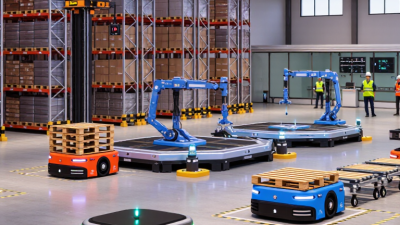
Automated guided vehicles (AGVs) support warehouse operations by moving pallets, bins, and materials along repeatable routes. They can connect receiving, storage, replenishment, and packing areas, reducing routine travel for employees. The MHI 2024 Annual Industry Report found that 55% of surveyed supply-chain professionals planned to increase technology investment. That signals strong interest, not guaranteed results. Small gains matter.

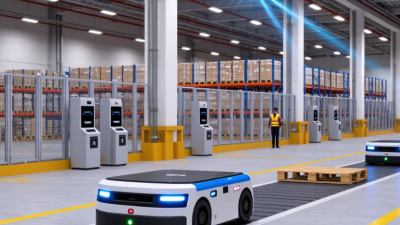
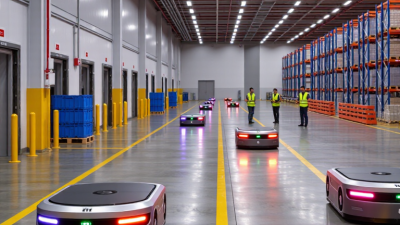
AGVs use sensors and mapped routes to navigate, pause, and reroute around obstacles. In practice, this can help keep replenishment moving during busy shifts and make material handoffs more predictable. But layout matters. A route that looks clear on a floor plan may cross a crowded packing bench at noon. Poorly planned charging, narrow aisles, or weak system integration can create new delays. AGVs support people; they do not remove the need for trained staff, safe traffic rules, and regular maintenance.

Tips: Start with one repetitive route, such as moving a pallet from receiving to a staging lane. Measure travel time, blocked routes, and manual interventions before expanding. Check turning space and pedestrian crossings during peak hours, not only during a quiet walkthrough. MHI’s survey reflects respondent plans, so assess performance with your own operational data.

Key Criteria for Comparing Warehouse AGVs in 2026

Comparing warehouse AGVs in 2026 starts with the work they must perform, not a feature list. Check rated payload against the heaviest real load, including pallets and attachments. Map aisle widths, turning points, floor joints, and busy crossing areas. Measure the route during peak shifts, when people and equipment share space. Small details matter. A two-centimeter floor lip can disrupt a route that looked clear on a drawing. Ask how vehicles respond to blocked paths, dropped loads, and temporary layout changes. Test those scenarios with a representative load, not an empty unit. A spreadsheet can flatter a weak fit.

Fleet software, navigation accuracy, and integration should be judged in daily operation. Confirm that dispatch tools connect with existing warehouse systems and show vehicle status, task queues, and fault alerts clearly. Check how routes are updated when storage locations change. Charging strategy affects uptime, too: compare battery runtime, charging time, and whether charging can happen between tasks. Review safety sensors and speed controls in the actual work environment, especially around blind corners. Ask about maintenance intervals, spare-part availability, and technician response times. Total cost includes these ongoing needs, not just purchase price. Run a pilot across several shifts and record completed tasks, delays, and manual interventions. The first week may look messy; that is useful evidence.

10 Best Auto Guided Vehicles for Warehouses in 2026

Key Criteria for Comparing Warehouse AGVs in 2026

The chart shows an example 100-point evaluation framework, not measured market data or a ranking of products. Prioritize payload fit, safety, and integration for your operation, then adjust the weights to match your facility’s tasks and requirements.

10 Best Automated Guided Vehicles for Warehouses in 2026

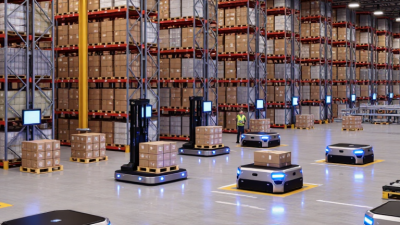
In 2026, the best automated guided vehicles for warehouses are the ones that fit real workflows, not just glossy demonstrations. A tugger AGV can pull several carts between picking zones and packing stations. Unit-load carriers move totes or cartons along repeatable routes. Pallet-moving and counterbalanced forklift AGVs handle different pallet heights and load weights.

Other practical options include reach-truck, narrow-aisle, under-rider, and conveyor-transfer AGVs. Sorting AGVs can direct parcels to designated lanes, while heavy-load platform vehicles move bulky equipment or materials. That makes ten useful configurations, not a universal ranking. A vehicle that saves labor in a wide aisle may cause congestion in a crowded one.

Before choosing, measure turning space, floor condition, traffic peaks, and the actual weight of typical loads. Check how vehicles stop near people, recover from blocked routes, and signal faults. Small details matter. A clean map helps. Pilot the system on one representative route, then compare completed trips, delays, and manual interventions. One assumption deserves a second look: automation does not automatically remove bottlenecks. Poor handoffs or inconsistent loading can simply move the delay elsewhere, and that part is easy to underestimate.

How Leading AGVs Differ by Load Capacity and Navigation

Warehouse AGVs differ most in the loads they can carry and the way they navigate crowded aisles. Compact units often move totes or small carts, while heavier models handle pallet loads and need wider turning space. A payload rating is only part of the picture: check the load’s dimensions, center of gravity, and floor condition. A tall, uneven stack can behave differently from a compact pallet, even at the same weight.

Navigation choices affect daily reliability. Line-following systems can suit stable routes, but floor marks may need upkeep. Laser-based navigation can adapt to changing layouts, though reflective surfaces and blocked sightlines deserve testing. Some vehicles use mapped routes and onboard sensors to avoid obstacles. That matters. Ask how each system responds when a worker parks a cart in its path, or when a delivery temporarily blocks an aisle. A smooth demonstration is not the same as a busy shift.

For a fair comparison, measure payload needs at peak periods and test vehicles on the actual floor, including tight corners and charging areas. Track missed stops, manual interventions, and travel time—not speed alone. There is no perfect navigation method. A system that performs well in a clean, open warehouse may need adjustment around people, temporary storage, and uneven traffic. Planning assumptions sometimes prove wrong; leave room to revise routes after real operating data comes in.

How to Choose an AGV for Your Warehouse Needs

Choosing an automated guided vehicle (AGV) starts with the job, not the machine. Map the loads, travel distance, and handoff points in your warehouse. A pallet route between receiving and storage has different needs from cart delivery beside packing benches. Measure aisle width, turning space, floor joints, and doorway clearance. Small obstacles matter.

Match capacity and movement to real operating conditions. Check the heaviest routine load, not just the average, and confirm the vehicle can turn safely with it. Compare navigation options against your layout: fixed routes may suit stable workflows, while changing routes can demand more flexible navigation. Ask how the AGV handles blocked aisles, low battery levels, and temporary changes. It should stop predictably. No system is effortless.

Before purchasing, run a pilot on a representative route during a busy shift. Track completed trips, delays, manual interventions, and charging time. Check that the fleet software can connect with your warehouse systems and that staff can learn basic recovery steps. Get clear details on maintenance, spare parts, and support response times. A polished demonstration can hide awkward handoffs. I would also question any forecast that assumes perfect traffic or uninterrupted operation; actual results depend on people, floor conditions, and workflow changes. Pilot data gives you a firmer basis for comparing the ten options.

10 Best Auto Guided Vehicles for Warehouses in 2026 — How to Choose an AGV for Your Warehouse Needs

Vehicle Type Typical Load or Towing Capacity Best-Fit Warehouse Tasks Common Navigation Options Key Advantages Main Considerations
1. Tow Tractor AGV Approximately 500–3,000 kg of towed load Moving carts, trailers, or train-style trolleys between receiving, storage, production, and shipping areas Inductive wire, magnetic tape, laser-based navigation, or mapped natural-feature navigation Moves several loads in one trip and can support repeatable milk-run routes Route design, trailer coupling, turning space, and load-train stability affect performance
2. Unit-Load Conveyor AGV Approximately 500–2,000 kg per unit load Transferring totes, cartons, or pallets between conveyor lines, workstations, and staging areas Magnetic or optical guidance, laser navigation, or mapped natural-feature navigation Can provide direct, repeatable handoffs at fixed transfer points Works best when transfer heights, load dimensions, and station positions are standardized
3. Automated Pallet Truck Approximately 1,000–2,500 kg Horizontal pallet transport, dock-to-staging moves, and replenishment over relatively short routes Laser navigation, magnetic guidance, QR-code landmarks, or mapped natural-feature navigation Designed for pallet movement without requiring a full-height forklift mast Check pallet entry clearance, floor condition, ramp limits, and pedestrian interaction zones
4. Counterbalanced Forklift AGV Approximately 1,000–3,000 kg, depending on lift height and configuration Picking up and placing pallets at floor-level locations, docks, and selected rack positions Laser navigation, reflector-based guidance, magnetic guidance, or mapped natural-feature navigation Can handle loads without relying on front support legs extending beneath the pallet Requires suitable aisle width, stable loads, and careful review of capacity at the required lift height
5. Reach-Truck AGV Approximately 1,000–2,000 kg, depending on mast height and load center High-bay pallet put-away and retrieval in warehouses with rack storage Laser navigation, reflector-based guidance, or mapped natural-feature navigation Reach mechanism supports pallet handling in appropriately designed storage aisles Confirm rack clearances, floor flatness, load stability, and rated capacity at the intended height
6. Fork-Over AGV Approximately 500–1,500 kg Moving palletized or specially supported loads over short, repeatable routes Magnetic tape, QR-code landmarks, laser navigation, or mapped natural-feature navigation Compact designs can suit straightforward point-to-point transport and dedicated routes Load supports and fork geometry must match the load; verify floor clearance and transfer positioning
7. Under-Ride or Unit-Carrier AGV Approximately 500–1,500 kg, depending on the carrier and load platform Collecting and transporting compatible carts, racks, or mobile platforms QR-code landmarks, laser navigation, magnetic guidance, or mapped natural-feature navigation Can travel beneath compatible carriers and connect multiple work areas with flexible dispatching Carrier dimensions, docking accuracy, obstacle clearance, and floor-level variations need validation
8. Omnidirectional AGV Approximately 500–2,000 kg, depending on platform design Moving equipment or loads where sideways motion, tight turns, or precise positioning is useful Laser navigation, mapped natural-feature navigation, or fixed guidance systems Highly maneuverable in suitable layouts and can reduce turning-space requirements Specify load distribution, floor quality, wheel maintenance, and safe operating speed for the application
9. Heavy-Load AGV Approximately 2,000–20,000 kg or more, with capacity highly dependent on configuration Transporting large fixtures, machinery, heavy pallets, or production assemblies Laser navigation, embedded guidance, magnetic guidance, or mapped natural-feature navigation Built for loads beyond the practical range of standard pallet-handling vehicles Requires engineering review of floor loading, braking distance, turning path, and emergency procedures
10. Narrow-Aisle Fork AGV Approximately 500–1,500 kg, depending on mast and aisle configuration pallet handling in dense storage areas where aisle width and storage geometry are constrained Wire guidance, magnetic guidance, reflector-based navigation, or laser navigation Can support space-efficient storage when vehicle and rack dimensions are designed together Measure aisle width, rack tolerances, turning points, and floor condition before selecting equipment

Selection note: Capacity figures are indicative ranges, not guaranteed specifications. Actual limits vary by vehicle design, load center, lift height, floor conditions, and operating speed. Compare vehicle dimensions, route layout, safety functions, charging strategy, and warehouse-system integration before making a selection.