10 Best AGV Systems for Warehouse Automation in 2026

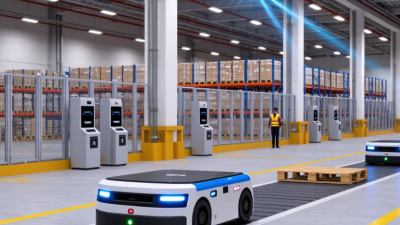
Warehouse automation is moving from experimental projects to daily operational infrastructure. An agv system can carry pallets, totes, and cartons between storage, picking, and shipping areas with consistent timing. In a live warehouse, that may mean a quiet vehicle crossing a 30-meter aisle every few minutes.

The International Federation of Robotics reported strong growth in professional service robots for transportation and logistics in its World Robotics 2024 report. Its data shows rising demand for mobile systems that reduce repetitive manual movement. Gartner has also forecast that robot-centric operations will become common in many new warehouses by 2028. These findings support a practical question: which solutions can deliver measurable value, rather than impressive demonstrations?

This guide reviews 10 best AGV systems for warehouse automation in 2026. Each option is considered through navigation, payload capacity, safety functions, software integration, charging, scalability, and vendor support. The analysis also considers installation complexity and total cost over time. A low purchase price may hide difficult integration work. That matters.

The best system depends on the warehouse, not the brochure. Narrow aisles, uneven floors, mixed traffic, and changing order volumes can expose weaknesses quickly. MHI industry research continues to identify labor availability, efficiency, and digital integration as major automation priorities. Still, adoption is not automatically successful. Some warehouses need AGVs, while others may benefit more from autonomous mobile robots or conveyor upgrades. This comparison aims to provide reliable guidance, while recognizing that no ranking can replace an on-site assessment.
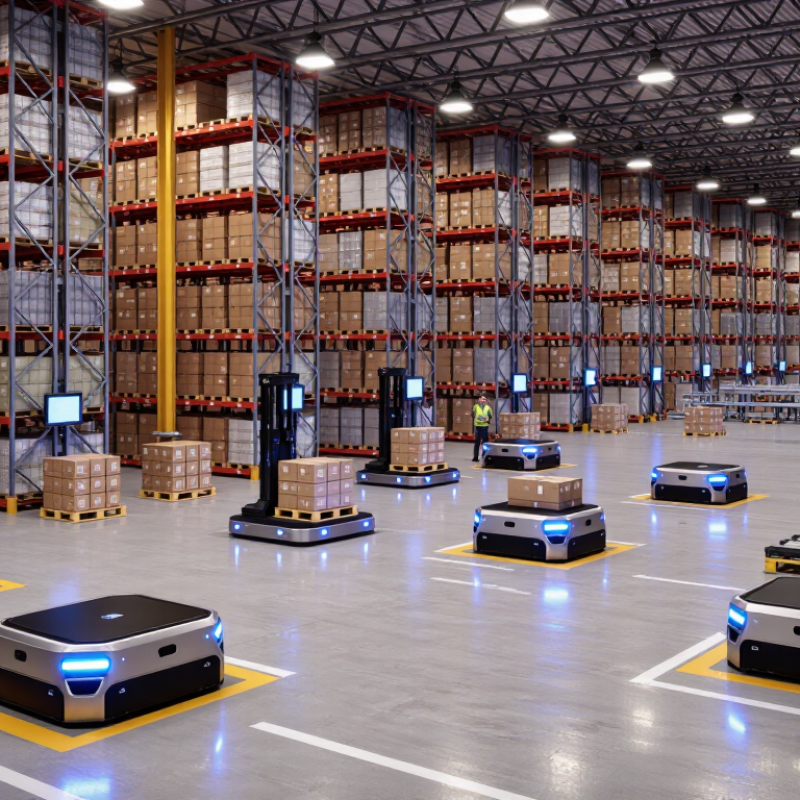
10 Best AGV Systems for Warehouse Automation in 2026

What AGV Systems Are and How They Support Warehouse Automation

10 Best AGV Systems for Warehouse Automation in 2026

AGV systems are driverless vehicles designed to move materials through warehouses. They follow magnetic tape, floor markers, laser maps, or programmed routes. Some carry pallets, while others tow carts between storage, picking, and packing zones. Their navigation method should match the building’s layout, traffic levels, and floor condition.

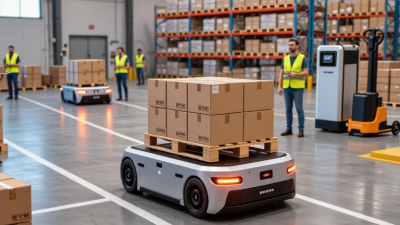
In a working warehouse, an AGV can collect a loaded pallet from receiving and deliver it to a storage aisle. Fleet management software assigns tasks, controls traffic, and reports vehicle locations. Sensors detect people, racks, and unexpected obstacles. When integrated with warehouse management software, AGVs can receive movement instructions without manual data entry. This reduces repetitive travel and gives employees more time for quality checks or exception handling.

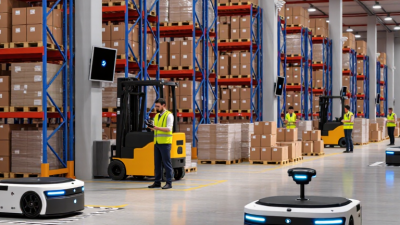
Small gains matter. Yet automation is not effortless. Poor route planning can create traffic near narrow doors or charging stations. A dusty marker, uneven floor, or poorly placed pallet may interrupt a mission. Managers should test real workflows before expanding the fleet. Battery capacity, payload limits, maintenance access, and emergency procedures also require regular review. AGVs improve consistency, but they do not replace thoughtful supervision. In many facilities, the best result comes from combining automated transport with trained workers who can resolve unusual conditions quickly.

10 Best AGV Systems for Warehouse Automation in 2026 - What AGV Systems Are and How They Support Warehouse Automation

A practical comparison of common AGV system configurations and their typical warehouse automation capabilities.

System Profile Primary Warehouse Task Typical Navigation Typical Payload Typical Speed Load Handling Battery and Charging Best-Fit Warehouse Environment
1. Unit-Load Transfer AGV Moving pallets or large containers between receiving, storage, production, and shipping zones Laser guidance, natural-feature navigation, or magnetic markers 500–2,000 kg 1.0–2.0 m/s Powered conveyor deck or lift platform Lithium-ion or lead-acid; opportunity charging is common High-volume distribution centers and manufacturing warehouses
2. Forklift AGV Automated pallet pickup, put-away, replenishment, and retrieval LiDAR-based navigation, reflectors, QR markers, or mapped routes 1,000–3,000 kg 0.8–1.5 m/s Forks with adjustable lift height, commonly up to 3–6 m Battery operation with automatic charging stations Pallet warehouses, cold stores, and structured rack aisles
3. Pallet Shuttle AGV Horizontal pallet movement across staging lanes and dock areas Natural navigation, laser positioning, or floor markers 600–1,500 kg 1.0–2.0 m/s Lift table, roller deck, or pallet forks Lithium-ion battery; charging can be scheduled during low-demand periods Cross-docking, staging, and dock-to-stock operations
4. Towing AGV Pulling multiple carts between workstations, supermarkets, and shipping areas Magnetic tape, laser guidance, or natural-feature navigation 1,000–10,000 kg total train load 0.8–1.5 m/s Automatic hitching or fixed towing connection Battery-powered; opportunity charging supports long shifts Automotive, industrial, and kitting facilities with repeatable routes
5. Cart-Transport AGV Transporting shelves, carts, totes, or work-in-process goods to operators SLAM, LiDAR, visual navigation, or QR-code localization 300–1,000 kg 0.8–1.5 m/s Top-mounted lift, docking pins, or conveyor interface Lithium-ion with automated or manual plug-in charging Goods-to-person picking, kitting, and assembly replenishment
6. Conveyor-Top AGV Transferring cartons, totes, and cases between fixed conveyor zones Laser navigation, magnetic guidance, or mapped autonomous routing 100–1,000 kg 1.0–2.0 m/s Roller, belt, or chain conveyor mounted on the vehicle Lithium-ion; charging is usually automated Parcel hubs, e-commerce fulfillment, and carton sortation areas
7. Low-Profile Under-Ride AGV Lifting and moving mobile racks, shelving units, or custom carts SLAM, LiDAR, visual markers, or QR navigation 300–1,500 kg 0.8–1.5 m/s Low-rise lifting platform, typically 25–75 mm lift height Lithium-ion; fleet charging is coordinated by software Flexible storage, goods-to-person picking, and high-SKU operations
8. Box and Tote AGV Moving bins, totes, and small cartons between storage and picking stations Vision-assisted SLAM, LiDAR, or QR-code navigation 50–300 kg 1.0–2.0 m/s Shelves, bins, rollers, or compact lift modules Lithium-ion with frequent opportunity charging Retail, pharmaceuticals, spare parts, and small-item fulfillment
9. Cleanroom AGV Moving sensitive materials in controlled manufacturing and storage areas Magnetic guidance, laser navigation, or facility map-based routing 100–1,000 kg 0.3–1.0 m/s Enclosed deck, cleanroom-compatible lift, or sealed conveyor Battery system selected for contamination and safety requirements Electronics, semiconductor, medical, and controlled-environment facilities
10. Outdoor Yard AGV Moving trailers, pallets, containers, or materials across external warehouse yards GNSS, LiDAR, radar, cameras, and high-accuracy local positioning 1,000–40,000 kg 0.5–2.0 m/s Trailer coupling, container platform, or heavy-duty deck Large-capacity battery, opportunity charging, or hybrid power Ports, yards, cross-docks, and weather-exposed logistics sites
Data note: The values shown are representative industry ranges for AGV system configurations, not specifications for a particular manufacturer or brand. Actual payload, speed, lift height, navigation accuracy, battery runtime, and charging performance depend on vehicle design, floor conditions, traffic rules, safety requirements, and warehouse layout.

Key Criteria for Evaluating AGV Systems in 2026

In 2026, evaluating an AGV system requires more than checking payload and travel speed. Start with workflow fit. Measure aisle widths, floor conditions, traffic peaks, and handoff points. An experienced warehouse team should test routes during real picking periods, not an empty shift. Navigation must remain stable near reflective wrap, pallets, and temporary obstacles. Ask for documented stopping distances and recovery behavior. Safety evidence should include risk assessments, guarding methods, emergency controls, and relevant local standards. Fast movement means little if workers cannot predict it.

Interoperability deserves equal attention. The AGV should exchange clear status data with warehouse software, conveyors, lifts, and charging equipment. Open interfaces can reduce future replacement costs, but “open” must be verified in writing. Evaluate battery endurance across a full operating cycle, including charging queues and cold areas. Track availability, fault frequency, mean repair time, and remote support response. Request site references with similar loads and layouts. Demonstrations can look polished; operating data is more trustworthy.

Tips: Build a weighted scorecard before demonstrations. Give safety, uptime, integration, serviceability, and total cost separate scores. Include installation, training, software updates, spare parts, and floor preparation. Run a small pilot with deliberately difficult routes. Record failed missions, manual interventions, and worker feedback. No system performs perfectly. That is useful evidence. Review weak points with operators, because a technically strong design may still slow replenishment or create awkward walking patterns.

10 Best AGV Systems for Warehouse Automation in 2026

Key Criteria for Evaluating AGV Systems in 2026

This criteria-based benchmark assigns a 100-point evaluation weight to the factors most relevant to modern warehouse automation. Safety and compliance receive the highest weighting because AGV deployments should align with applicable requirements such as ISO 3691-4 and ANSI/RIA R15.08. Navigation reliability, integration capability, fleet scalability, payload performance, battery operation, total cost of ownership, and serviceability complete the evaluation framework.

The percentages represent a neutral purchasing framework rather than vendor-specific performance claims. Actual results should be validated through site trials, safety assessments, and total-cost analysis.

Ten Leading AGV Systems and Their Core Warehouse Applications

Ten Leading AGV Systems and Their Core Warehouse Applications

Warehouse automation now relies on several AGV system types, each serving a defined movement task. Pallet-moving AGVs handle floor-level transfers between receiving docks and storage aisles. Automated forklifts place pallets into selective racks. Tugger AGVs pull multiple carts across long warehouse routes. Unit-load AGVs move cartons, totes, or bins without pallets. Conveyor-linked AGVs connect production areas with temporary storage. Their value depends on route accuracy, load stability, and safe interaction with workers.

The remaining systems address more specialized applications. Sorting AGVs direct parcels toward shipping lanes using barcode or vision data. Picking AGVs bring shelves or containers to operators, reducing walking time. Shelf-carrying robots lift mobile racks and support goods-to-person fulfillment. Counterbalance AGVs manage heavier loads where narrow turning space creates risk. Hybrid AGV systems combine towing, lifting, and scanning functions for mixed workflows. Clear floor markings matter. So does reliable traffic control.

In practical warehouse trials, sensors must be tested under dust, glare, uneven flooring, and changing carton sizes. A vehicle may perform well during a quiet pilot but slow sharply during peak dispatch hours. That weakness is easy to miss. Engineers should measure charging delays, blocked routes, human crossings, and recovery time after faults. Not every operation needs ten systems. A modest fleet may deliver better control, although manual exceptions can still expose gaps in training and layout design.

Comparing Navigation, Payload Capacity, Safety, and Integration

10 Best AGV Systems for Warehouse Automation in 2026

Comparing Navigation, Payload Capacity, Safety, and Integration

In 2026, warehouse AGVs must navigate more than fixed floor routes. Strong systems combine laser mapping, camera guidance, and reliable obstacle detection. They should reroute around pallets, workers, and temporary storage without stopping every few minutes. Payload capacity also needs practical testing. A vehicle rated for 1,500 kilograms may perform poorly on ramps or uneven floors. Measure load stability, braking distance, and battery performance during a full shift.

Tips: Test navigation during peak traffic. Use real pallets. Check narrow aisles, reflective surfaces, and poor lighting. Ask for recorded performance data, not only laboratory claims.

Safety depends on layered controls. Emergency stops, speed limits, warning lights, and human detection should work together. Operators need clear alerts and simple recovery procedures. Integration is equally important. The AGV should connect with warehouse management software, conveyor controls, charging stations, and inventory systems. Open interfaces reduce manual data entry and support future upgrades. However, integration projects often take longer than expected. I have seen technically capable systems underperform because maps were outdated and staff lacked training. That weakness deserves attention before purchasing.

How to Select the Right AGV System for Your Warehouse Needs

How to Select the Right AGV System for Your Warehouse Needs

Selecting an AGV system starts with the warehouse, not the vehicle catalogue. Measure aisle widths, floor conditions, turning areas, and loading points. Record payload weights and pallet dimensions during busy shifts. A vehicle rated for 1,000 kilograms may struggle with uneven loads or steep transitions.

Study your daily workflow carefully. Identify repeated routes, waiting zones, manual handoffs, and peak-hour congestion. The right AGV should connect with your warehouse management system and existing equipment. Check navigation accuracy near racks, doors, and reflective surfaces. Ask for live demonstrations using your containers, not generic test materials. Small differences matter.

Safety and maintainability deserve equal attention. Look for obstacle detection, controlled stopping, clear warning signals, and simple recovery procedures. Operators should understand the system after practical training, not only after reading manuals. Review battery charging time, spare parts access, software updates, and service response. A pilot test can reveal more than a polished presentation. It may also expose poor route design, weak network coverage, or unrealistic productivity targets. That is useful evidence, even when it delays deployment. Choose measurable performance goals, such as delivery accuracy, cycle time, and recovery frequency. Then compare results across several operating conditions, including heavy traffic and low-temperature areas.