2026 Best AMR Robots for Warehouse Automation
Warehouse automation in 2026 starts with a practical question: which robots can move your actual workload reliably? An amr robot uses onboard sensors, mapping, and navigation software to transport goods through changing warehouse environments. Typical jobs include moving totes between picking stations, delivering pallets to staging areas, and returning empty containers. Fit matters. A robot suited to lightweight order picking may struggle with heavy pallets, narrow aisles, or uneven floor transitions. The best choice depends on those details, alongside throughput targets, integration requirements, and the people sharing its routes.
Comparing the best AMR robots requires more than reading payload specifications or watching a polished demonstration. Useful evidence includes documented safety features, supported warehouse management system interfaces, charging requirements, and service availability in your region. Ask vendors to demonstrate loaded travel, blocked routes, and recovery after a network interruption under conditions resembling your facility. Measure completed missions per hour, intervention frequency, and battery performance across a representative shift. Check the assumptions. A quoted throughput figure may exclude waiting at workstations, congestion near packing benches, or time spent charging.
This guide approaches leading options through their intended applications, operational constraints, and the evidence available to support vendor claims. Purchase price matters, but deployment work, software subscriptions, maintenance, and staff training also shape total ownership costs. One uncomfortable detail deserves attention: automating a poorly arranged material flow can preserve its inefficiencies rather than solve them. Even a careful comparison leaves uncertainty until a site trial tests the proposed workflow. The goal is a defensible shortlist, with clear reasons to investigate each option further.
What Are AMR Robots and How Do They Work in Warehouses?
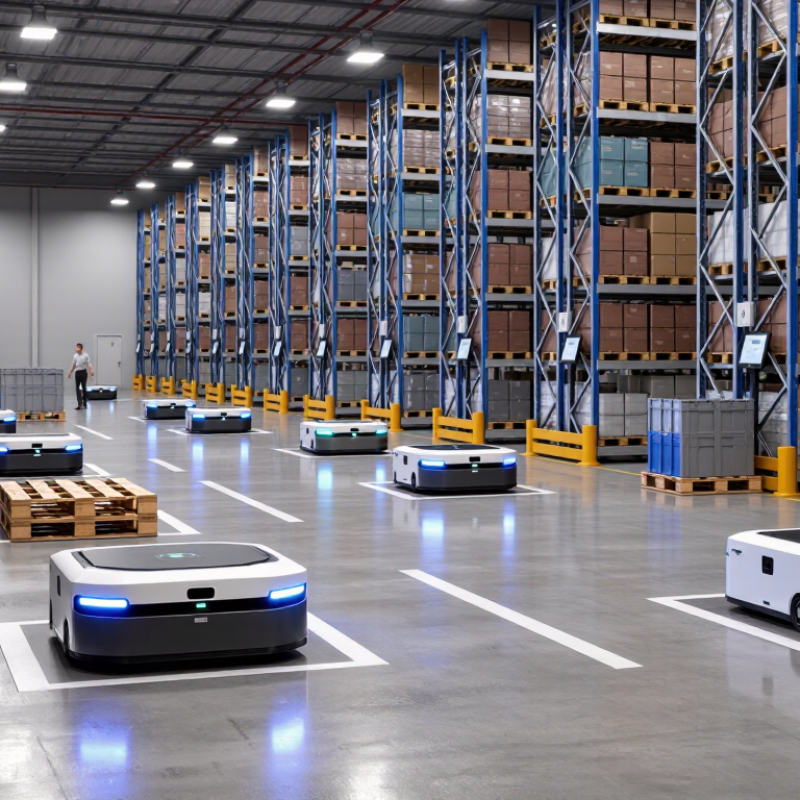
Autonomous mobile robots, or AMRs, move goods through warehouses without relying on fixed tracks or magnetic floor tape. They combine onboard sensors, mapping software, and navigation algorithms to estimate their position and plan routes. A typical task might involve carrying a tote from a storage aisle to a packing station. Work begins with a digital request, often from warehouse software. The robot selects a route and adjusts its movement when sensors detect obstacles. Routes can change.
In a working warehouse, AMRs may use laser scanners, cameras, and wheel encoders to navigate around racks and pallets. Fleet software assigns jobs and manages traffic when several robots approach the same intersection. Workers interact through touchscreens, scanners, or designated loading points. Precision still matters. A tote placed crookedly can interrupt an automated handoff, even when navigation works correctly. Obstacle detection also does not replace site-specific risk assessments, suitable speeds, or clear pedestrian procedures.
For a 2026 deployment, useful comparisons include payload capacity, loaded stopping distance, charging requirements, and integration with existing workflows. Battery runtime deserves scrutiny because heavy loads and frequent stops can reduce operating time. Narrow aisles may look suitable on a floor plan yet create queues during busy shifts. That is easy to underestimate. A pilot should measure completed trips, intervention frequency, and waiting time at actual pickup points. Some workflows may need simpler layouts before adding more robots.
Key Types of Warehouse AMRs and Their Applications
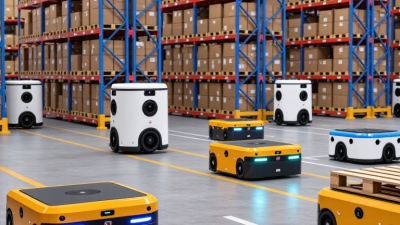
Warehouse AMRs serve different jobs, so the best choice for 2026 depends on your material flow. Start with the load. Transport AMRs move totes, cartons, or carts between receiving, storage, and packing stations. They suit repetitive trips that otherwise keep employees walking. Pallet-moving AMRs handle heavier loads, including transfers from staging areas to production lines. Check rated capacity, pallet compatibility, floor conditions, and turning clearance before selecting either type. A narrow aisle can make an otherwise suitable robot impractical.
Picking AMRs support several workflows, including carrying containers alongside workers and bringing movable shelving to picking stations. These applications can reduce walking, but replenishment delays may still leave stations waiting. Sorting AMRs route parcels or totes toward designated destinations, making them useful where order volumes fluctuate. Inventory-scanning AMRs collect barcode or RFID data to support stock checks and identify location discrepancies. However, damaged labels and obstructed views can still require manual checks. Automation has gaps. Selecting faster robots will not fix inaccurate inventory records or poorly arranged packing areas.
Tips: Pilot one route using real loads, busy intersections, and normal shift traffic. Measure completed moves per hour, intervention frequency, and charging downtime. Include mixed pedestrian traffic in the site risk assessment. An imperfect pilot is useful: repeated stops near a packing queue may reveal a layout problem worth fixing before expansion.
Criteria for Evaluating the Best Warehouse AMRs in 2026
Choosing warehouse AMRs in 2026 requires evidence from your own operating conditions. Market growth provides context. The International Federation of Robotics’ World Robotics 2024 report recorded nearly 113,000 transportation and logistics robot sales in 2023. That represented 35% annual growth. These figures cover broader logistics applications, so they cannot establish warehouse suitability alone. Measure completed missions per hour, intervention frequency, and cost per successful move during a representative pilot.
Test the bottlenecks. Run loaded robots through narrow aisles, pedestrian crossings, and congested packing stations during peak shifts. Measure throughput with charging, blocked routes, and manual recovery included. A robot carrying 1,000 kilograms offers little value if its turning clearance disrupts adjacent picking stations. Request documented safety assessments and evidence addressing applicable requirements, including ISO 3691-4 for driverless industrial trucks. Check how protective stops affect neighboring traffic, especially where people and robots share intersections.
Integration deserves equal scrutiny. Verify that warehouse software exchanges task status, inventory locations, and exception messages without repeated manual corrections. Calculate total ownership costs using integration fees, battery replacement, maintenance labor, and realistic fleet availability. Demand traceable logs. Track operator interventions per 100 missions and investigate recurring failures before expanding the fleet. A short pilot can miss seasonal congestion; that remains a weakness even when average throughput looks convincing. Set acceptance thresholds before testing, and retain unsuccessful runs in the evaluation dataset.
Leading Warehouse AMR Options Compared by Use Case
The best warehouse AMR for 2026 depends on what moves, how far, and how often routes change. For small-item picking, consider robots that carry totes between pickers and packing stations. A 25-kilogram tote moving repeatedly across a 60-meter aisle makes travel reduction a useful pilot metric. Keep pickers nearby. Compare completed orders per labor hour, including time spent waiting for robots during busy periods. High robot speed alone tells you little about picking performance.
For dense inventory storage, shelf-moving AMRs bring mobile racks to fixed picking stations. They suit operations with many small products and frequent order changes, provided rack dimensions and floor conditions match system requirements. Space still matters. Check turning clearance, station queues, and access for replenishment before estimating storage gains. For heavier loads, pallet-moving AMRs fit repetitive transfers between receiving, storage, and outbound staging. Specify actual pallet dimensions, load stability, and pickup height; nominal payload capacity cannot answer every handling question.
Mixed workflows may benefit from tugger AMRs pulling carts along repeatable replenishment routes. However, trailers need turning space, and one blocked crossing can delay several deliveries. A neat route map can be misleading; temporary stock often changes the usable path. That deserves scrutiny. During a pilot, record manual interventions, charging downtime, and recovery time after blocked routes. Ask suppliers for documented safety assessments and test integration with your warehouse software using realistic order volumes.
Steps to Select, Integrate, and Scale a Warehouse AMR Fleet
The best warehouse AMR for 2026 should fit your workflows, floor conditions, and peak demand. Start with evidence. The International Federation of Robotics’ World Robotics 2024 report recorded approximately 113,000 transportation and logistics service robots sold in 2023. Sales increased 35% year over year, although this category extends beyond warehouse AMRs. Map travel distances, pallet weights, aisle widths, and pedestrian crossings before comparing robot specifications. Measure your current cost per completed move. A robot carrying 600 kilograms still needs testing on your actual ramps and uneven floor joints.
Integration deserves equal attention. Connect mission requests and completion confirmations to your warehouse management system, with clear rules for failed transfers. Pilot one repeatable route, such as moving replenishment totes between storage and packing. Track completed missions, manual interventions, charging time, and congestion during busy shifts. Test blocked aisles. A quiet overnight trial can hide problems that appear when people and carts share intersections. It is tempting to blame navigation software; poorly placed staging areas may deserve closer inspection.
Tips: Set acceptance thresholds before the pilot, using your own operational baseline rather than advertised maximum speeds. Include empty-container returns, damaged labels, and shift changes in testing. Scale by adding a small group of robots, then recheck throughput and queue lengths. More robots can create more waiting. Leave room to revise charging locations and dispatch priorities when actual traffic challenges your original assumptions.