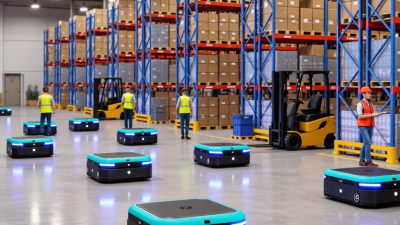
What Is the Best AMR Automated Mobile Robot in 2026?
In 2026, the best amr automated mobile robot is the one that fits a real workflow, not a universal ranking. A unit moving totes between production cells faces different demands from one carrying pallets through a busy warehouse. Payload, turning space, floor condition, traffic, and shift length all affect performance. Small details matter. A narrow aisle, a reflective floor, or a frequently blocked charging area can change how smoothly a system operates.
This guide compares the factors buyers should examine before choosing an AMR. It considers navigation and obstacle detection, load capacity, fleet software, integration with existing systems, safety features, service support, and total operating cost. Specifications are useful, but they are only part of the decision. Ask vendors to demonstrate the robot on representative routes, with realistic loads and normal workplace traffic. Check how it behaves when a path is blocked, a task changes, or a battery needs charging. Request references from sites with similar conditions, and verify performance claims against documented tests.
A polished demonstration can make deployment look effortless. Day-to-day operations are rarely so tidy. The right choice depends on measurable needs, credible support, and a rollout plan that allows for adjustment. No shortlist can replace an on-site assessment, but careful comparison can help identify which models deserve a closer look.
What Defines an Autonomous Mobile Robot
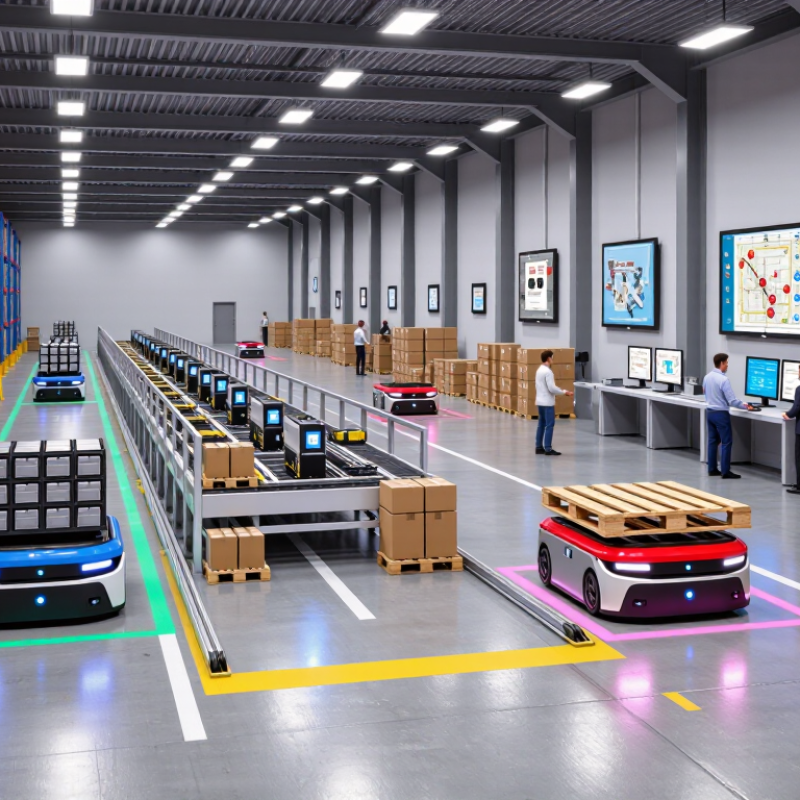
What makes a machine an autonomous mobile robot is not simply its wheels or electric drive. It must perceive its surroundings, estimate its position, and choose a safe route while moving. In a warehouse, that may mean slowing near a blind aisle, then rerouting around a pallet left in its path. Small details matter.
An AMR typically combines cameras, lidar or other sensors, onboard computing, and navigation software. Sensors collect evidence; software compares it with a map and updates movement decisions. The robot may also coordinate with doors, lifts, charging stations, or a fleet manager. Connectivity alone does not make a robot autonomous.
Autonomy is bounded. Not magic. A useful system handles routine variation, detects uncertainty, and stops or requests help when conditions exceed its limits. Human operators still need clear status signals and a practical way to recover a blocked unit. Performance depends on floor conditions, traffic, payload, and maintenance; even a carefully mapped route can fail when a glossy surface confuses a sensor. Test it in the actual work area.
How AMRs Navigate and Complete Tasks
What Is the Best AMR Automated Mobile Robot in 2026?
How AMRs Navigate and Complete Tasks
An AMR’s usefulness depends less on speed than on how reliably it moves through changing work areas. It builds a map using onboard sensors, then estimates its position as it travels. Cameras, laser scanners, and other sensors can detect shelves, people, and temporary obstacles. The robot compares its planned route with live readings and adjusts when a pallet blocks an aisle. Small corrections matter.
After a task arrives, an AMR may collect a tote, deliver it to a station, and report completion. Software can assign routes across several robots, helping reduce traffic near narrow doorways. Good systems also provide clear alerts when a robot needs help. Navigation is not magic. Reflective surfaces, clutter, or a changed layout can cause delays. A careful site trial can reveal issues that a showroom demonstration may miss.
Tips: Measure aisle widths and turning spaces before deployment. Test routes during busy shifts, not only when floors are empty. Keep maps current, mark loading points clearly, and review stop-and-resume procedures with operators. Ask how the system handles lost localization and blocked paths. There is no universal best robot; suitability depends on payload, floor conditions, task frequency, and integration needs. These details are easy to overlook. The first route plan may need revision.
Key Criteria for Evaluating AMRs in 2026
What Is the Best AMR Automated Mobile Robot in 2026?
Key Criteria for Evaluating AMRs in 2026
The best AMR is the one that fits your actual workflow, not the one with the most impressive demonstration. Start by checking payload, turning radius, travel distance, and charging needs against real routes. A robot that carries 500 kilograms may still struggle with a narrow aisle or a sloped threshold. Test it during busy shifts, when people, carts, and temporary obstacles change the route. Watch how it stops, reroutes, and resumes work. Safety behavior matters as much as travel speed.
Evaluate navigation in your site’s lighting and floor conditions. Dust, reflective surfaces, floor joints, and changing layouts can affect performance. Check how easily the AMR connects with existing fleet software, warehouse systems, and door or lift controls. Ask for measured uptime, recovery procedures, maintenance intervals, and local service response times. Compare total operating costs, including batteries, integration, training, and downtime. A polished pilot can hide the work required to maintain reliable daily operation.
Tips: Run a small pilot on a representative route. Record completed trips, blocked passages, manual interventions, and delivery time across several shifts. Ask operators what feels awkward; their feedback may expose a problem your dashboard misses. Revisit your success targets after the pilot. Estimates are useful, but site conditions rarely behave perfectly.
How Leading AMR Types Compare Across Applications
The best AMR depends less on a technology label than on the work it must perform. For moving carts between production cells, tugger robots can handle repeated routes and several connected loads. They suit predictable flows, but tight corners and poorly staged carts can slow them down. Small details matter.
Unit-load robots move pallets, totes, or fixtures directly on a lifting deck. They work well between storage areas and nearby workstations, especially when loads arrive in consistent positions. A few centimeters of misalignment can still cause a missed pickup, so transfer points need careful testing.
Autonomous forklifts are better suited to pallet handling, including floor-level pickup and some rack operations. They may reduce manual travel, though aisle width, pallet condition, and pedestrian traffic affect performance. For piece picking, compact AMRs can bring shelves or containers to people. That can shorten walking distances, but it does not automatically solve picking errors or inventory problems. Real sites are messy. A useful comparison starts with payload, route length, handoff design, and floor quality. Teams should also observe peak-hour traffic, not just a quiet demonstration. Early estimates can look persuasive; actual cycle times may disappoint. Pilot routes and measured results provide a sounder basis for choosing a robot type.
What Is the Best AMR Automated Mobile Robot in 2026? — How Leading AMR Types Compare Across Applications
| AMR type | Typical load class* | How it handles loads | Best-fit applications | Main advantages | Key considerations |
|---|---|---|---|---|---|
| Under-cart / unit-load AMR | Light to medium; commonly around 100–1,000 kg | Moves beneath a compatible cart, rack, or load carrier and lifts or couples to it. | Moving components, totes, and work-in-process between production cells, kitting areas, and assembly lines. | Can automate existing cart-based workflows; supports flexible point-to-point transport and repeated routes. | Requires compatible carriers, accessible pickup points, and sufficient clearance beneath the load. |
| Tugger AMR | Medium to heavy; often several hundred kilograms to multiple tonnes of towed load | Tows one or more carts or trailers, usually through a defined coupling interface. | Milk runs, line-side replenishment, and scheduled movement of multiple carts across factories or distribution facilities. | Can move several loads per trip and reduce repetitive manual towing. | Trailer length and turning radius affect maneuverability; routes, couplings, and cart stability need assessment. |
| Pallet-moving AMR | Medium to heavy; commonly around 500–1,500 kg, with models varying by design | Uses forks, a platform, or another pallet interface to pick up and transport palletized loads. | Pallet transport between receiving, storage, staging, production, and shipping areas. | Automates frequent pallet movements without requiring every task to be performed by a manually operated pallet truck. | Floor condition, pallet quality, pickup accuracy, load overhang, and aisle width affect suitability. |
| Autonomous forklift AMR | Heavy; capacity is model-specific and commonly in the pallet-handling range | Uses lifting forks to collect, carry, and place pallet loads at floor or elevated positions. | Warehouse pallet put-away, retrieval, dock transfers, and movement between production and storage. | Combines mobile transport with lifting; can reduce routine forklift travel in suitable workflows. | Requires carefully validated pickup and drop-off locations, load dimensions, rack clearances, and pedestrian-safety controls. |
| Goods-to-person mobile shelving AMR | Light to medium; capacity depends on the shelf or rack and the carried inventory | Moves a shelf, rack, or inventory carrier to a stationary picking workstation. | E-commerce and retail fulfillment, small-parts picking, and order consolidation. | Brings inventory to workers and can support flexible storage layouts and high-frequency picking. | Performance depends on inventory organization, workstation capacity, replenishment, and traffic management. |
| Top-module / conveyor AMR | Light to medium; typically selected to match the item, tote, or carton flow | Uses a conveyor, lift, or transfer module to hand off totes, trays, or cartons. | Conveying between workstations, sortation zones, packing areas, and production lines. | Enables automated transfers between fixed stations while reducing dependence on long conveyor runs. | Needs compatible transfer heights and interfaces; handoff timing and item stability must be engineered. |
| Inspection / patrol AMR | Light; carries sensors and inspection equipment rather than production loads | Travels through designated areas while collecting sensor readings, images, or environmental data. | Routine facility inspections, condition monitoring, and repeatable data collection in accessible areas. | Can perform scheduled, repeatable patrols and record observations for review. | Sensor results depend on route access, environmental conditions, and the inspection task; it does not replace every specialist inspection. |
*Load classes are indicative examples, not universal specifications. Actual payload, towing capacity, lift height, speed, and operating performance vary by system configuration and site conditions. The best AMR is the type that matches the load, pickup and drop-off interfaces, route, traffic, and required workflow.
How to Choose the Best AMR for a Specific Operation
The best AMR is not the fastest machine on a showroom floor. It is the one that fits the work: payload, travel distance, aisle width, floor condition, and handoff points. Map one real route, from a loaded cart at a picking station to its drop-off location. Note door thresholds, crossing traffic, and where workers wait. Small details matter.
The International Federation of Robotics’ World Robotics 2024 report recorded nearly 113,000 professional service robots sold for transportation and logistics in 2023, a 35% increase year over year. That growth signals broad adoption, not a universal solution. A narrow aisle or frequent manual handoff can outweigh a robot’s headline speed. Check whether the system integrates with existing fleet software, warehouse systems, and safety procedures. Ask for measured performance during busy shifts, not just a polished demonstration.
Run a site pilot with representative loads and routes. Track completed missions, charging time, blocked paths, and recovery after a stoppage. Keep the scorecard simple. A quiet Tuesday can flatter any system; peak-hour reality is less polite. I would also review exceptions with operators, because a technically successful route may still create awkward workarounds. The “best” choice is the one that improves the operation without adding hidden labor.
Related Posts
-
How to Choose the Best AMR Robot for Your Warehouse?
-

Top Mobile Robot Solutions for Global Buyers in 2026?
-
Top Tips for Choosing the Right AGV Robot for Your Business?
-

What Are Material Handling Robots and How Do They Work?
-

What Are the Top AI Robots for Global Buyers?
-
Top 10 Mobile Robots Revolutionizing Automation in 2023