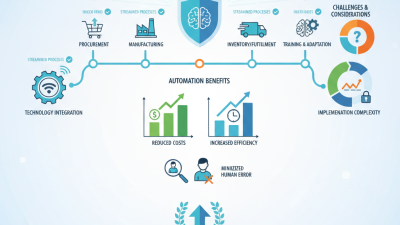
Why Do Global Buyers Need Supply Chain Automation Tools?
Global purchasing rarely follows one clock. A buyer may place an order in Singapore, rely on a supplier in Mexico, and track freight through several ports. Each handoff creates details to confirm: quantities, dates, shipping milestones, and changes to delivery plans. When updates sit in separate emails and spreadsheets, teams can miss a delay until it affects production or customer commitments. Small gaps add up. That matters.
Supply chain automation tools help connect routine purchasing and logistics information in one workflow. They can route purchase orders, capture supplier confirmations, flag inventory changes, and show shipment milestones as they are recorded. This gives buyers a clearer view of open orders and emerging risks across regions. It can also reduce repetitive data entry, leaving staff more time to review exceptions and speak with suppliers. For a team managing hundreds of active orders, one timely alert may be more useful than another status meeting.
Still, software is not a cure-all. If supplier records are incomplete or teams use different definitions for key fields, automation can carry those mistakes forward. It can make bad inputs travel faster. Buyers should assess data quality, system integration, access controls, and the effort required to maintain workflows before choosing a platform. The practical case is strong, but not automatic: tools work best when processes are clear and people know when to question an alert. This article explores why global buyers adopt them, what benefits they can expect, and where careful implementation matters.

Defining Supply Chain Automation for Global Buyers
For global buyers, supply chain automation means using connected software to handle repeatable purchasing, inventory, shipping, and documentation tasks. A purchase order can trigger supplier confirmation, stock updates, and shipment alerts without staff retyping details across systems. Automation may also flag a late container or a mismatch between an invoice and a delivery. It does not mean removing people from every decision. That distinction matters.
The 2024 MHI Annual Industry Report found that 55% of surveyed supply chain leaders were increasing investment in technology and innovation.
For buyers, the value is practical: clearer order status, fewer manual handoffs, and faster visibility when plans change. Yet automation can also make a poor process faster. Local supplier formats, time zones, and inconsistent data still create friction. Teams should test workflows with real orders before expanding them.
Tips: Start with one recurring task, such as matching purchase orders to invoices. Track errors and processing time before and after. Keep an exception route for unusual shipments; not every alert needs to become an automated decision.
Why Resilience Matters: 93% of Supply-Chain Leaders Planned to Build It (McKinsey, 2020)
McKinsey reported in 2020 that 93% of supply-chain leaders planned to build resilience. That figure shows broad intent, not proof that every company became more resilient. For global buyers, resilience means spotting disruption early and knowing which orders, materials, and routes are exposed. A delayed component at one port can idle an assembly line thousands of miles away. Small gaps matter.
Automation tools can connect purchase orders, shipment updates, inventory records, and supplier alerts in one operating view. That shared view helps procurement teams compare alternatives before a shortage becomes urgent. Yet technology alone cannot repair weak supplier relationships or inaccurate data. If delivery information is entered late, a polished dashboard may still mislead. Teams need clear ownership, tested contingency plans, and regular reviews of critical items. Track lead-time changes for a few high-risk materials, then compare alerts with actual arrivals. The 2020 figure also raises a harder question: did plans improve recovery speed? Buyers can measure how quickly teams detect disruption, respond, and confirm that alternate supply arrives as expected.
How Automation Streamlines Sourcing, Orders, and Supplier Coordination
Global sourcing often begins with scattered details: a quote in an email, a revised specification in a spreadsheet, and a delivery date in a chat. Supply chain automation brings these records into a shared workflow. Small gaps matter. A buyer can compare supplier quotes using consistent fields, such as unit price, lead time, packaging, and minimum order quantity. This makes differences easier to review before an order is approved.
Once a quote is approved, an automated process can prepare order details from the agreed terms. Staff can check quantities, addresses, and requested ship dates before sending the purchase order. That review is important; automation can repeat an incorrect entry just as quickly as a correct one. Order dashboards also show pending approvals and delayed confirmations, so a team can follow up before a missed reply becomes a production problem.
Supplier coordination improves when both sides can see the same milestones, document versions, and open questions. A reminder about an overdue sample or missing packing detail is more useful when it points to the exact item and due date. Still, suppliers may use different formats, and some updates require a phone call. Automation reduces routine chasing, but it does not replace judgment or a working relationship. A practical rollout might begin with one product category, then adjust the workflow when real exceptions appear.
Warehouse Automation’s Growth: Gartner Forecast 75% Adoption by Large Enterprises by 2026
Global buyers face longer routes, volatile demand, and tighter delivery windows. Warehouse automation connects receiving, storage, picking, and dispatch through shared data. Gartner forecasts that by 2026, 75% of large enterprises will adopt some form of intralogistics smart robots in warehouse operations. The forecast points to a shift from isolated machines toward coordinated workflows. Still, robots cannot fix poor item data or badly planned layouts. One missed barcode can send a carton to the wrong aisle.
MHI’s 2024 Annual Industry Report found that 55% of surveyed supply chain leaders were increasing investment in technology and innovation. That supports practical upgrades, but spending alone does not guarantee better service. Before and after deployment, buyers should compare order accuracy, labor hours per order, and dock-to-stock time. Results vary by facility, and even well-designed systems need people to handle exceptions.
Tips: Map one busy path, such as pallet receiving to storage. Track mis-picks, downtime, and manual overrides during a pilot. Small pilots help.
Why Do Global Buyers Need Supply Chain Automation Tools? - Warehouse Automation’s Growth: Gartner Forecast 75% Adoption by Large Enterprises by 2026
| Dimension | Data or operational measure | Why it matters to global buyers |
|---|---|---|
| Warehouse automation adoption | 75% forecast adoption by 2026 among large enterprises, according to the forecast referenced in the title. | This is a forecast, not a confirmed adoption result. It signals growing interest in automating warehouse operations. |
| Order fulfillment | Track order cycle time, orders picked per labor hour, and on-time shipment rate. | These measures help buyers assess whether automation supports faster, more reliable order processing. |
| Inventory visibility | Track inventory record accuracy, stockout frequency, and the time needed to locate inventory. | More timely, accurate inventory information can support replenishment and reduce avoidable searching or handling. |
| Labor and material handling | Monitor manual travel distance, handling steps per order, and labor hours per unit shipped. | These operational measures reveal where workflow changes or automated movement may reduce repetitive work. |
| System integration | Assess data exchange between warehouse, order-management, transportation, and inventory systems. | Connected systems help keep order, inventory, and shipment information consistent across supply-chain operations. |
| Resilience and scalability | Evaluate peak-volume capacity, recovery time after disruption, and the effort required to add sites or workflows. | Global buyers can compare how well a solution accommodates demand changes and operational disruption. |
| Investment evaluation | Compare implementation and operating costs with measured changes in throughput, accuracy, and service levels. | A baseline and consistent post-deployment measures make it easier to evaluate outcomes without assuming a universal return. |
Note: The 75% figure is presented as a forecast for large enterprises by 2026, not as a verified adoption rate. Operational measures listed above are evaluation metrics, not claimed industry-wide results.
How Buyers Evaluate Integration, Visibility, Security, and Total Cost of Ownership
Global buyers should evaluate supply chain automation by how well it connects existing systems, not by the number of features on a sales sheet. Can it match supplier IDs across an ERP, purchase-order platform, and freight feed? Can teams trace a delayed shipment from booking to warehouse receipt without copying data between screens? Integration failures create manual work. They also hide errors. MHI’s 2024 Annual Industry Report found that 55% of respondents were increasing investment in supply chain technology and innovation. Investment only pays off when tools fit real workflows.
Visibility should show usable details: the last scan, expected arrival, and who owns the next action. A dashboard alone is not visibility. Security deserves equal scrutiny; buyers should check role-based access, encryption, audit logs, and supplier account controls. IBM’s 2024 Cost of a Data Breach Report put the global average breach cost at $4.88 million, across industries. That is a warning, not a supply-chain-specific estimate. Total cost of ownership also includes integration, data cleanup, training, support, and exception handling. The cheapest subscription may not be cheap. Buyers should test a small lane or supplier group first, then measure time saved and errors reduced. Some benefits remain hard to quantify. That uncertainty should be recorded, not glossed over.
Why Global Buyers Evaluate Supply Chain Automation Tools
Relative importance of key evaluation criteria on a 0–100 scale
Integration, security, and shipment visibility are essential for connecting systems, protecting data, and tracking orders across borders. Total cost of ownership includes implementation, licensing, training, support, and ongoing maintenance. Scores are illustrative framework ratings, not survey results.
Related Posts
-
What is Supply Chain Automation and How Can It Benefit You?
-
Top 10 AGV Vendors Revolutionizing Warehouse Automation and Logistics in 2023
-

Top Benefits of AGV Automation for Global Supply Chain Efficiency?
-
2026 Best Picking Robots for Efficient Automation Solutions?
-
China Top 10 Automated Guided Vehicle System Suppliers
-
How to Choose the Right AGV Automation Solution for Your Business Needs