What Are the Top Mobile Robot Types in 2026?

In 2026, mobile robot technology is moving from controlled demonstrations into warehouses, hospitals, farms, streets, and homes. This guide examines the leading types shaping that transition, including autonomous mobile robots, automated guided vehicles, delivery robots, drones, robotic arms on wheels, and legged systems. Each category solves different problems. Some carry heavy pallets across marked routes. Others navigate crowded corridors, uneven floors, or outdoor paths using cameras, lidar, GPS, and onboard artificial intelligence.

Practical performance matters more than impressive specifications. We will compare mobility, autonomy, payload capacity, operating environments, safety features, energy use, and maintenance demands. Real deployments often reveal details that product brochures overlook, such as charging queues, slippery surfaces, software updates, and staff training. Evidence from manufacturers, research institutions, and established industry reports will support the discussion. However, market rankings can change quickly. Data quality also varies between regions and vendors. Some labels remain messy. A robot may fit several categories at once, especially when it combines wheels, arms, and adaptive navigation. This guide recognizes those limits while identifying the systems most likely to influence investment and daily operations. Readers will gain a clearer framework for choosing the right mobile robot, rather than following excitement alone. Performance must be measured. Reliability decides value.

What Are the Top Mobile Robot Types in 2026?

Mobile Robot Fundamentals and Classification Criteria

What Are the Top Mobile Robot Types in 2026?

Mobile Robot Fundamentals and Classification Criteria

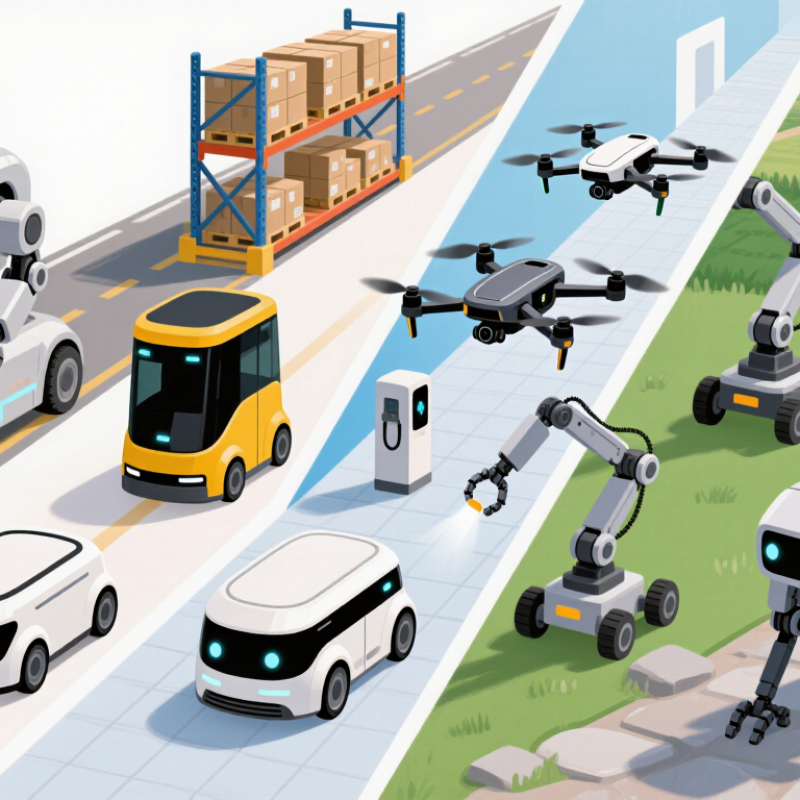
Mobile robots move through workplaces, homes, farms, and public spaces. Their core systems combine drive units, sensors, onboard computing, and control software. In 2026, common categories include autonomous mobile robots, automated guided vehicles, autonomous forklifts, delivery robots, and inspection robots. Aerial robots also belong to the wider mobile robotics field, although they operate differently.

Classification should begin with movement. Does the robot follow fixed routes, map changing spaces, or fly through open air? Autonomy is another key factor. Some machines follow simple commands, while others interpret obstacles and adjust routes independently. Payload, operating environment, navigation method, human interaction, and safety controls also matter. A warehouse robot carrying 500 kilograms needs different design priorities than a lightweight inspection unit. The labels can overlap. That is normal.

Tips: Compare the robot’s real task, not its advertised category. Check payload performance, turning space, battery endurance, sensor coverage, and recovery behavior. Ask how it responds when a box blocks its route. Small tests reveal more than polished demonstrations.

Experience from practical evaluations shows that classification alone cannot predict success. Floor conditions, lighting, network reliability, and worker habits often change results. A technically advanced robot may underperform in a crowded workspace. This is where careful site assessment becomes essential. No category is perfect, and some choices deserve another review.

Autonomous Mobile Robots for Warehouses and Factories

What Are the Top Mobile Robot Types in 2026?

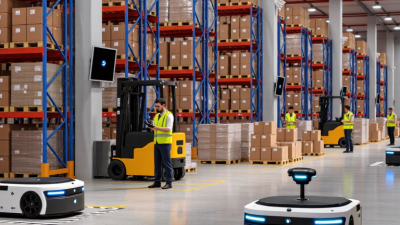
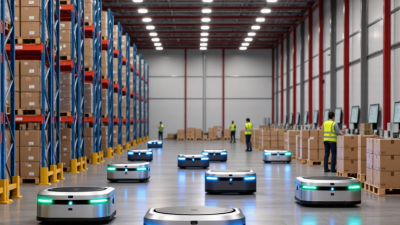
Autonomous mobile robots are reshaping warehouse and factory movement. The main types include goods-to-person robots, tugger robots, autonomous forklifts, and inventory-scanning units. Goods-to-person robots carry shelves or bins to picking stations. Tugger robots pull several carts across long factory routes. Autonomous forklifts move pallets between receiving areas, storage racks, and production lines.

The International Federation of Robotics reported nearly 205,000 professional service robots sold in 2023. Transportation and logistics robots represented about 113,000 units, growing 35% year over year. These figures show strong demand for mobile automation. Yet deployment is not simply a hardware purchase. A robot may stop when floor markings fade, pallets overhang, or workers change routes. That weakness matters. Reliable systems need accurate maps, safe speed controls, clear traffic rules, and trained operators.

Tips: Start with one repetitive route. Measure travel time, blocked paths, picking accuracy, and charging delays. Test during a busy shift, not only in quiet demonstrations. Check whether the robot integrates with warehouse and production software. A small pilot often reveals overlooked problems.

Factories can benefit from mobile robots that deliver components to assembly cells. Warehouses may gain more from pallet movement or shelf delivery. Inventory robots can scan labels, but poor lighting still causes errors. Human judgment remains necessary. The best 2026 strategy may combine automation with practical supervision, rather than removing people from every process.

What Are the Top Mobile Robot Types in 2026? - Autonomous Mobile Robots for Warehouses and Factories

A practical comparison of common mobile robot categories used for material handling, transport, inventory, and production support.

Robot Type Primary Function Typical Payload Typical Travel Speed Navigation Method Common Operating Area Best-Fit Applications
Autonomous Mobile Robot (AMR) Moves carts, totes, bins, or work-in-process materials between locations. 100–1,500 kg 1–2 m/s Laser mapping, cameras, inertial sensors, and onboard software Warehouses, distribution centers, and factories Flexible point-to-point transport and dynamic workflows
Automated Guided Vehicle (AGV) Follows repeatable routes to transport loads in stable processes. 500–5,000 kg 0.5–1.5 m/s Magnetic tape, QR markers, reflectors, wires, or fixed guidance Manufacturing plants and high-volume warehouses Repeated line-side delivery and pallet movement
Autonomous Pallet Mover Collects, transports, and places pallets with limited manual intervention. 600–2,000 kg 1–2 m/s LiDAR, cameras, pallet detection, and facility maps Pallet storage, staging, dock, and production areas Pallet-to-line replenishment and dock-to-storage transport
Autonomous Tugger Robot Tows one or more carts through production or warehouse routes. 1,000–10,000 kg total train load 0.8–1.5 m/s Laser navigation, cameras, mapped routes, and safety sensors Factories, kitting areas, and large distribution facilities Milk runs, line-side supply, and multi-cart delivery
Autonomous Forklift Loads, unloads, transports, and stores palletized goods. 1,000–3,000 kg 0.8–1.8 m/s LiDAR, 3D cameras, localization software, and pallet recognition Racking aisles, docks, staging zones, and cold stores Pallet put-away, retrieval, cross-docking, and replenishment
Shelf-to-Person Robot Brings inventory shelves, racks, or bins to stationary operators. 250–1,500 kg per mobile unit 1–2 m/s Mapped navigation, markers, encoders, and obstacle detection Goods-to-person fulfillment centers Piece picking, order consolidation, and high-density storage
Inventory Scanning Robot Captures barcode, RFID, image, and location data while traveling through aisles. 10–100 kg equipment load 0.3–1 m/s LiDAR, cameras, visual localization, and barcode or RFID sensing Warehouse aisles, retail backrooms, and production stores Cycle counting, location verification, and stock discrepancy detection
Mobile Manipulator Combines autonomous movement with robotic-arm handling or machine interaction. 5–50 kg arm payload 0.3–1.5 m/s LiDAR, 3D vision, localization, and robot-arm sensing Flexible manufacturing cells and laboratory environments Machine tending, kitting, inspection, and light assembly

Note: Payload, speed, and operating ranges are representative industry ranges. Actual performance depends on vehicle design, load geometry, floor conditions, safety requirements, traffic density, battery configuration, and site layout.

Delivery, Service, and Inspection Mobile Robots

What Are the Top Mobile Robot Types in 2026?
Delivery, Service, and Inspection Mobile Robots

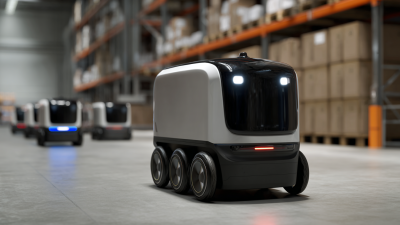
Delivery mobile robots are becoming practical tools for campuses, hospitals, hotels, and residential communities. They transport meals, parcels, medicines, and supplies along mapped routes. Reliable models use cameras, depth sensors, and safe-speed controls near people. In field trials, route accuracy often matters more than maximum speed. A robot that reaches the wrong entrance still creates extra work. Weather, elevators, uneven paving, and crowded hallways remain difficult variables.

Service mobile robots support staff rather than replace every human task. They may guide visitors, carry linens, deliver food, or answer simple questions. Clear voice prompts and large visual displays help users with limited technical experience. However, interaction quality can decline in noisy lobbies. Staff also need simple controls when a robot stops beside a chair or doorway. This practical detail is easy to overlook. Human assistance remains necessary.

Inspection mobile robots operate in warehouses, factories, construction areas, and utility facilities. They can record temperature, vibration, leaks, surface damage, or restricted-zone conditions. A stable sensor platform produces more useful evidence than a fast-moving machine. Inspection records should include timestamps, locations, sensor status, and images for later review. Yet automated alerts can produce false positives. Technicians must verify unusual readings before taking action. Battery planning, data protection, maintenance access, and clear operating procedures shape real-world reliability.

Outdoor, Agricultural, and Construction Mobile Robots

What Are the Top Mobile Robot Types in 2026?

Outdoor, Agricultural, and Construction Mobile Robots

By 2026, outdoor mobile robots will focus on transport, inspection, and repetitive ground work.

Autonomous utility vehicles can carry tools across large sites, while inspection robots scan roads, pipelines, and remote facilities. They use cameras, lidar, satellite positioning, and obstacle detection. A dusty lens or weak signal can still reduce accuracy. Human operators remain essential near workers, traffic, livestock, and uneven terrain.

Agricultural robots are becoming more selective, not fully universal. Small field machines can remove weeds, monitor crops, distribute materials, or collect ripe produce. Their narrow wheels protect soil better than heavy equipment. Thermal cameras and plant imaging help identify stress before leaves visibly change. However, mud, dense foliage, and changing sunlight confuse sensors. Farmers should test performance across several seasons, rather than trust a short demonstration.

Construction mobile robots are built for harsh, shifting environments. Autonomous haulers move materials, robotic platforms survey structures, and tracked units inspect unstable areas. Their value grows when sites are noisy, crowded, and physically demanding. Reliable systems need geofencing, emergency stops, clear warning signals, and detailed operating logs. A robot that performs well on flat ground may fail beside a fresh trench. That limitation deserves attention. Careful deployment, trained supervisors, and regular safety checks often matter more than impressive automation claims.

Choosing the Right Mobile Robot for Different Applications

Choosing a mobile robot starts with the task, not the machine. Autonomous mobile robots suit warehouses with changing routes and mixed shelving. Automated guided vehicles work better on fixed paths, repeated loading points, and predictable traffic. Towing robots can move several carts through production areas. Small delivery robots fit hospitals, campuses, and offices where quiet movement matters. The International Federation of Robotics reported 541,302 industrial robot installations in 2023. That figure shows strong automation demand, but it does not make every robot suitable.

Tips: Map walking routes before testing. Measure aisle width, floor gaps, lighting, noise, and door behavior. Check payload, battery cycles, safety sensors, and integration needs. A robot that performs well in a clean demo may struggle beside a wet loading dock. Pilot one route for four weeks. Record travel time, intervention frequency, damage events, and worker feedback.

Interact Analysis’s 2024 mobile robot market research identifies manufacturing and logistics as major adoption areas. Its findings support a practical distinction: stable workflows favor guided vehicles, while variable workflows favor autonomous navigation. In my experience, labor savings are often overstated. Supervisors still manage exceptions, charging, traffic, and software updates. Choose the simplest robot that meets the real duty cycle. Leave room for failure. A slower machine with reliable recovery may outperform a faster one that stops often.

Top Mobile Robot Types in 2026: Choosing the Right Robot for Different Applications

Representative payload-capacity ranges by mobile robot type

Payload capacity is a practical starting point when selecting a mobile robot. Delivery robots are optimized for lightweight last-mile transport, while indoor AMRs support flexible warehouse and factory workflows. AGVs and autonomous forklifts are better suited to heavier, repeatable material-handling tasks, whereas outdoor UGVs are commonly selected for inspection, security, agriculture, and uneven-terrain operations. Actual capacity depends on vehicle configuration, safety requirements, terrain, and operating environment.