7 Best AMR Automated Mobile Robots for Global Buyers
Warehouses are moving beyond fixed conveyor lines. They now need flexible systems that can handle changing orders, layouts, and labor conditions. This is where an amr automated mobile robot becomes valuable.
The International Federation of Robotics reported nearly 205,000 professional service robots sold worldwide in 2023. Transportation and logistics represented the largest application, with about 113,000 units sold. IFR also recorded strong year-on-year growth in this category. These figures show clear momentum, but they do not guarantee success for every buyer. Floor quality, payload needs, software compatibility, and service coverage still decide the result.
Interact Analysis identifies mobile robots as a rapidly developing segment within warehouse automation. Its research highlights growing demand for autonomous transport, especially in distribution and manufacturing environments. Yet market forecasts can look cleaner than real facilities. A robot may perform well in a demonstration, then struggle near narrow aisles, reflective floors, or mixed pedestrian traffic.
Robotics expert Henrik Christensen once said, “Robots are not going to take all the jobs, but they will change the nature of work.” That shift is already visible. Workers may walk fewer steps, but they need better training and clearer exception procedures. The best solution is not always the most advanced model.
This guide compares seven leading AMR options for global buyers. It considers payload, navigation, fleet management, integration, safety features, scalability, and regional support. Some rankings remain debatable. That is intentional. A reliable AMR decision should begin with measured workflow data, not attractive brochures or impressive videos.
What Are AMRs and How Do They Work?
7 Best AMR Automated Mobile Robots for Global Buyers
What Are AMRs and How Do They Work?
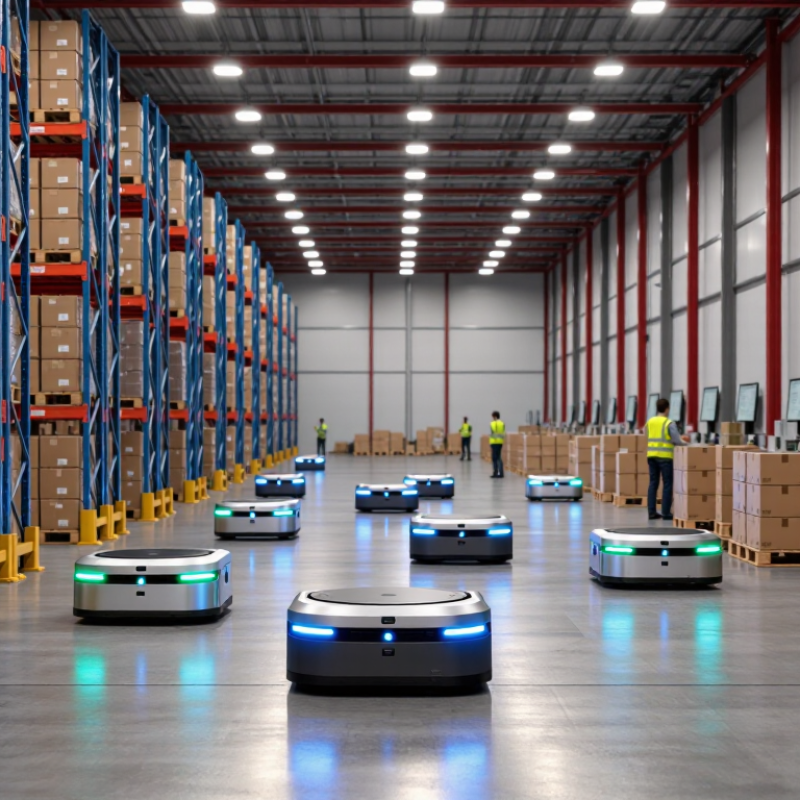
Autonomous Mobile Robots, or AMRs, move materials without fixed tracks or magnetic lines. They use cameras, lidar, sensors, and onboard software to understand their surroundings. An AMR creates or receives a digital map of the facility. It then plans a route, avoids obstacles, and adjusts movement in real time.
A typical task begins with a digital order, such as collecting a container from a storage zone. The robot travels to the location, confirms its position, and carries or pulls the load. After delivery, it may return for another assignment or recharge automatically. Human staff still manage exceptions, safety checks, and changing priorities. In practical warehouse trials, performance often depends more on floor layout than on advertised speed.
No deployment is perfect. Shiny floors, poor lighting, crowded aisles, and unexpected objects can reduce reliability. A map can also become outdated after equipment moves. Buyers should review payload limits, turning space, battery time, software integration, safety functions, and local service coverage. These details matter when comparing the seven best AMRs for global operations.
Tips: Walk the robot through a real work area before purchasing. Test emergency stops, obstacle detection, charging, and handover steps. Ask for performance data from a similar facility, not only laboratory demonstrations. Keep a manual backup plan. It may still be needed.
Key Criteria for Comparing AMRs Worldwide
When comparing the seven best AMRs for global buyers, start with measurable operating conditions. Payload, shelf height, turning radius, and floor quality directly affect performance. An AMR carrying 1,000 kilograms may underperform on narrow aisles or uneven concrete. Check navigation accuracy, obstacle response, battery runtime, and charging time during realistic shifts. The International Federation of Robotics reported 541,302 industrial robots were installed worldwide in 2023. This wider automation growth shows strong demand, but AMR selection still requires site-specific testing.
Integration is equally important. Evaluate warehouse software compatibility, fleet orchestration, cybersecurity controls, and local technical support. MHI’s 2024 Annual Industry Report found that 55% of supply chain leaders planned to increase technology investment. Buyers should compare total cost, not only purchase price. Include installation, software subscriptions, maintenance, training, spare parts, and downtime. A cheaper unit can become expensive after one difficult integration. Regulations and safety documentation also vary between markets, so global deployments need clear compliance evidence. Performance claims are not enough.
Tips: Request a live pilot with real loads, peak traffic, and human workers nearby. Measure completed missions per hour, failed missions, recovery time, and energy use. Keep the scoring sheet simple. It is easy to overvalue speed. In practice, reliability often matters more. Some comparisons remain imperfect because vendors calculate productivity differently. Ask for raw test conditions before trusting the headline figure.
7 Best AMR Categories for Global Buyers
Typical payload capacity ranges for comparing automated mobile robots worldwide
Payload is a practical first-screening criterion when selecting an AMR. Goods-to-person and outdoor delivery robots generally serve lighter loads, while pallet transport, tugger, and autonomous forklift systems are designed for heavier warehouse and industrial operations. Actual performance also depends on navigation method, floor conditions, safety requirements, battery strategy, charging infrastructure, and local compliance standards.
The ranges represent commonly published operating envelopes across commercial AMR categories and are intended for category-level comparison rather than brand-specific product selection.
Industry Applications and Operational Benefits of AMRs
7 Best AMR Automated Mobile Robots for Global Buyers
Industry Applications and Operational Benefits of AMRs
Automated mobile robots support material movement in warehouses, factories, hospitals, and distribution centers. They can carry totes between storage aisles, picking stations, and packing areas. In manufacturing, AMRs deliver components to work cells without fixed conveyor routes. Their sensors help them navigate around workers, carts, and temporary obstacles.
Operational benefits often appear in small details. A robot can move a heavy container while employees focus on inspection or assembly. It can also provide repeatable delivery timing during long shifts. Many systems connect with warehouse or production software, giving managers clearer task visibility. This data can reveal waiting time, congested aisles, and underused equipment.
Real projects still require careful planning. A rushed deployment may create traffic problems instead of reducing them. Floor markings, charging locations, load sizes, and emergency procedures need practical testing. Start with one route and measure travel time, labor effort, and delivery errors. Then adjust the workflow. AMRs are useful tools, but they do not repair poor processes automatically. Human supervision remains important when layouts change or unusual loads appear. We have seen promising trials slow down because staff training was treated as an afterthought. Reliable performance depends on maintenance records, safety checks, and honest review of operating data.
How Global Buyers Can Choose the Right AMR
7 Best AMR Automated Mobile Robots for Global Buyers
How Global Buyers Can Choose the Right AMR
Global buyers should begin with workflow evidence, not attractive demonstrations. MHI’s 2024 Annual Industry Report found that
37% of supply-chain organizations already use robotics and automation.
That figure signals growing acceptance, but it does not guarantee operational value. A suitable AMR must match payload, shelf height, aisle width, travel distance, and shift duration. A robot that moves quickly may still fail beside a narrow packing station.
Ask suppliers for measured results from comparable facilities. Check average mission time, battery charging time, fleet availability, and recovery after blocked routes. Navigation should support changing layouts and mixed traffic. Integration also matters. Confirm compatibility with warehouse management and execution systems through documented interfaces. Hidden integration work can exceed the equipment budget.
Safety deserves equal attention.
Verify risk assessments, emergency stopping, obstacle detection, and compliance with ISO 3691-4. Regional requirements may also affect certification, electrical systems, and data handling. IFR’s World Robotics 2024 report recorded
541,302 industrial robot installations in 2023,
although that figure excludes many AMRs. It shows a mature automation ecosystem, not a reason to skip local validation. Run a small pilot with real cartons, uneven floors, and peak-hour congestion. Measure completed missions, not promised capacity. A perfect scorecard is impossible. Field conditions expose uncomfortable gaps. Buyers should leave room for operator feedback, maintenance access, and one failed test before approving a global rollout.