What Are the Top 10 Warehouse Automation Systems?
Warehouse automation is no longer limited to large distribution centers. A small fulfillment site may use barcode scanning and conveyor belts, while a busy operation could combine autonomous mobile robots, automated storage, and robotic picking. The right setup depends on the work: order volume, product dimensions, SKU variety, available floor space, and delivery deadlines all shape the decision. A system that moves cartons quickly may still struggle with fragile items or frequent changes in product mix.
This guide compares ten common warehouse automation systems, including automated storage and retrieval, goods-to-person solutions, conveyors, sortation equipment, mobile robots, and picking technologies. It looks at what each system does, where it can help, and what managers should check before investing. Useful details include integration with warehouse management software, maintenance needs, worker training, uptime, and the time required to install equipment. These factors can matter as much as headline speed.
There is no universal winner. Not every site needs robots. A narrow aisle, uneven inventory data, or seasonal demand can change the value of a proposed system. Even a well-planned installation may need adjustment once real orders start moving through it. The ranking is a starting point, not a purchasing verdict. Treat it as a practical comparison, then test the options against actual order patterns, safety requirements, and long-term operating costs.
Defining Warehouse Automation: MHI Reports 55% Plan Higher Tech Investment
Warehouse automation uses equipment and software to move, store, identify, and fulfill goods with less manual handling. It ranges from barcode-guided workflows and conveyor lines to autonomous mobile robots, automated storage, and robotic picking. MHI reports that 55% plan to increase technology investment, signaling strong interest rather than guaranteed results. That distinction matters. A budget can fund sensors and machines, yet poorly mapped inventory or inconsistent order data may still slow a shift. Managers should link each proposed system to a measurable bottleneck, such as walking time, picking errors, or dock congestion.
A useful comparison of ten system types should consider throughput, accuracy, integration effort, floor space, and maintenance capacity. For example, conveyors can support steady carton flow, while autonomous vehicles may suit changing routes and mixed tasks. Neither choice is automatically better. Pilot one zone, record baseline performance, then review results during both busy and quiet weeks. Include worker training and downtime plans; even a small sensor fault can create a queue beside a packing bench. The 55% figure is encouraging, but it does not reveal how many projects will meet their targets.
The Top 10 Systems: AS/RS, AMRs, AGVs, Robotics, and More
What Are the Top 10 Warehouse Automation Systems?
The Top 10 Systems: AS/RS, AMRs, AGVs, Robotics, and More
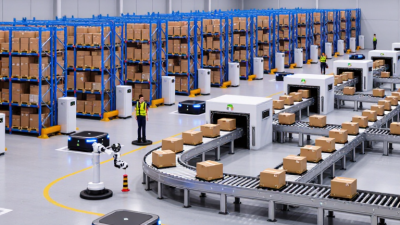
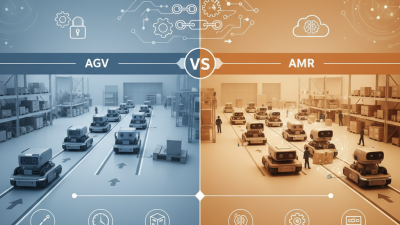
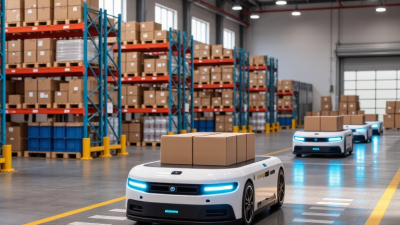
Warehouse automation covers ten distinct systems: automated storage and retrieval systems (AS/RS), autonomous mobile robots (AMRs), automated guided vehicles (AGVs), robotic piece-picking, robotic palletizing, conveyors, sortation systems, goods-to-person stations, pick-to-light or voice-directed picking, and warehouse execution or management software. AS/RS retrieves bins from tall racks, while AMRs navigate changing routes around workers. AGVs typically follow fixed paths. Conveyors move cartons between zones; sorters direct them into specific lanes. Each system solves a different bottleneck.
Robotic arms can pick individual items or stack heavy cases onto pallets. Goods-to-person systems bring shelving or containers to a fixed workstation, reducing walking. Pick-to-light and voice tools guide workers through orders, while warehouse software coordinates inventory, tasks, and equipment.
The awkward truth: automation can make a poor layout faster, not better. Test workflows with real order patterns before choosing equipment.
Industry reports provide useful context, though not a guarantee of warehouse results. MHI’s 2024 Annual Industry Report found that 55% of surveyed supply-chain leaders planned to increase investment in technology and innovation. The International Federation of Robotics reported 541,302 industrial robot installations worldwide in 2023; that figure spans industries, not warehouses alone. Use it as broad adoption context, not a warehouse-specific forecast. Local labor patterns and SKU shapes matter.
Sources: MHI, 2024 Annual Industry Report; IFR, World Robotics 2024.
How the Systems Work Across Storage, Picking, Packing, and Shipping
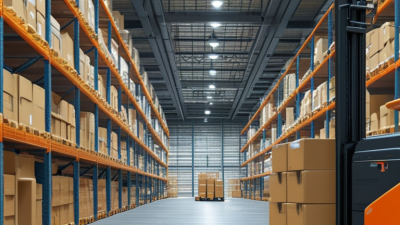
Warehouse automation works best as a connected flow, not a collection of isolated machines. Automated storage and retrieval systems, shuttle racks, and compact storage grids place inventory in dense locations. Conveyors or mobile robots then move totes toward active work areas. Each system suits different loads, aisle layouts, and order patterns.
At picking stations, goods-to-person equipment brings items to workers, reducing long walks. Mobile robots can also carry shelves or totes, while light-guided and voice-directed tools help confirm each pick. Small screens show the item and quantity. Errors still happen, especially when product labels are unclear or stock records are stale. Automation cannot fix bad data by itself.
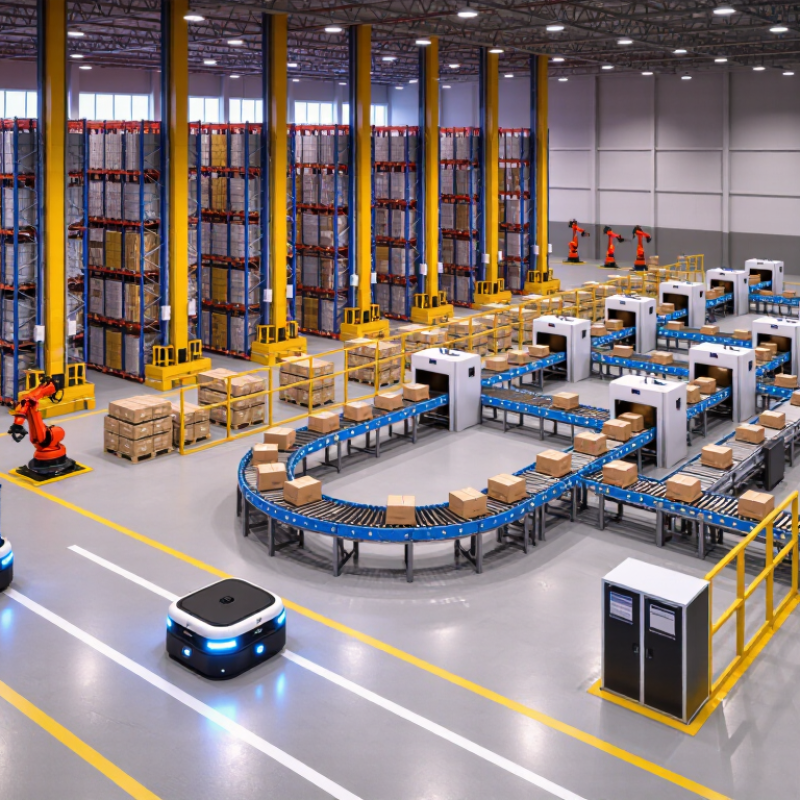
After picking, sorters route orders to packing lanes, where scales and dimensioning equipment check parcel size and weight. Automated carton systems can choose box sizes, while print-and-apply units prepare shipping labels. Conveyors gather completed parcels near outbound doors, and scanning verifies their destinations before loading. That matters. A fast line can still create congestion if packing capacity falls behind. Teams should measure queue times, mispicks, and downtime, then adjust staffing and equipment settings as demand changes. No single layout fits every warehouse.
Compare Throughput, Storage Density, Flexibility, and Labor Requirements
Warehouse automation is not one machine; it is a mix of systems with different trade-offs. The main options are conveyor-sortation, unit-load crane storage, shuttle storage, cube-based storage, vertical lift modules, autonomous mobile robots, automated guided vehicles, goods-to-person stations, robotic piece-picking, and automated palletizing. Conveyors and shuttles can move steady, high volumes quickly. Dense storage systems save floor space, but can be harder to reconfigure. Mobile robots offer flexible routes, while guided vehicles usually follow more fixed paths. Picking and palletizing robots can reduce repetitive lifting, though irregular items still challenge them.
Throughput depends on order mix, travel distance, and peak demand—not just equipment speed. Storage density also depends on clear height, aisle width, and fire-safety design. Labor needs shift rather than disappear: people still replenish stock, resolve exceptions, and maintain equipment. MHI’s 2024 Annual Industry Report found that 55% of surveyed companies had increased supply-chain technology investment; 87% expected to adopt robotics and automation within five years. These are survey findings, not guarantees of savings. A system that performs well in a simulation may struggle with real carton damage or late replenishment.
Tips: Measure orders per hour, storage locations per square foot, and labor hours per order before comparing proposals. Test with actual products and peak-season order data. Small details matter. Be cautious: the best option on paper may not fit your building or workforce.
Selection and Integration: Match WMS, WES, and Controls to Site Needs
Choosing warehouse automation systems starts with site needs, not a feature list. Walk the order path from receiving dock to shipping lane. A warehouse management system should own inventory accuracy, locations, and order priorities. A warehouse execution system can coordinate people, automated equipment, and task timing. Controls connect commands to sensors, motors, and safety interlocks. Keep each layer’s responsibility clear. Overlap sounds convenient until two systems issue conflicting instructions. Check peak-hour volume, SKU variation, aisle width, Wi-Fi coverage, and recovery procedures. A narrow conveyor jam can halt a whole route.
The MHI 2024 Annual Industry Report found that 55% of surveyed organizations planned to spend over $1 million on supply chain innovation within two years.
Investment alone does not guarantee a fit. Start integration with a small, representative workflow, such as replenishing fast-moving items during a busy shift. Test order changes, equipment stops, and inventory corrections before expanding. Measure throughput, picking errors, downtime, and recovery time against today’s baseline. Small details matter. Expect the first process map to miss something; returns and replenishment often reveal gaps. Review those gaps with operators, IT staff, and controls engineers before locking the design.