Which Automated Guided Vehicle System Is Best in 2026?
Choosing the best automated guided vehicle system in 2026 starts with the work it must perform—not the most impressive product brochure. The International Federation of Robotics reported nearly 205,000 professional service robots sold worldwide in 2023. Transportation and logistics accounted for 113,000 units, up 35% year over year, in its World Robotics 2024 report. That growth signals real demand, but it does not prove that every warehouse needs the same vehicle. A narrow aisle, reflective floor, crowded crossing, or frequently moved pallet can change the right choice.
A useful automation principle comes from technology leader Bill Gates: “The first rule of any technology used in a business is that automation applied to an efficient operation will magnify the efficiency.” For buyers, that means checking routes, payloads, traffic patterns, charging needs, software integration, and support before comparing prices. Small details matter. A vehicle that stalls at a busy dock can undermine an otherwise polished system. And the cheapest quote may not be the lowest-cost operation.
This guide compares system types, navigation methods, safety features, scalability, and total cost of ownership. It also separates automated guided vehicles from autonomous mobile robots, terms that vendors sometimes blur. The best fit depends on your facility’s real operating conditions and the evidence your supplier can provide. There is no universal winner. Some trade-offs remain.
What an Automated Guided Vehicle System Is and How It Operates
Which Automated Guided Vehicle System Is Best in 2026?
What an Automated Guided Vehicle System Is and How It Operates
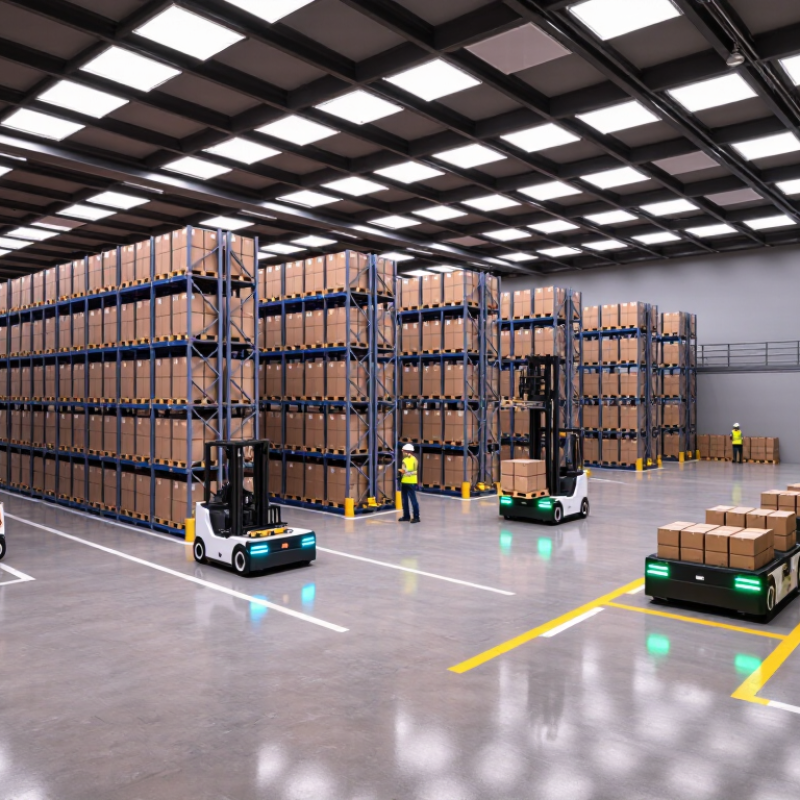
An automated guided vehicle system moves materials through a facility with limited direct human driving. It usually includes vehicles, navigation equipment, traffic controls, charging points, and software that assigns tasks. Depending on the design, vehicles may follow floor markings, use reflectors, or navigate with sensors and digital maps. A small vehicle might carry a tote between a packing station and a conveyor. Larger models can move loaded pallets. The right setup depends on the load, route, floor conditions, and pace of work—not just vehicle speed.
When a task is requested, the system selects an available vehicle and sends it to a pickup point. Sensors help the vehicle detect obstacles and slow or stop when a path is blocked. It collects the load, follows its assigned route, and delivers it to a defined location. Staff may still need to load items, manage exceptions, and keep routes clear. That part is easy to underestimate. Even a well-planned system can struggle when aisles change or traffic rules are unclear. Real-world trials reveal details a floor plan may miss.
Tips: Map busy routes before choosing equipment. Test with typical loads, not empty vehicles. Check turning space, charging access, and pedestrian crossings. Keep the first deployment modest; early assumptions may need revision.
Key Criteria for Comparing AGV Systems in 2026
Comparing AGV systems in 2026 starts with the work they must perform, not the vehicle specifications alone. Map each route, pickup point, and handoff, then measure trips per hour during a typical shift. Check payload limits against the heaviest real load, including its pallet or cart. Small mismatches matter. Floor joints, narrow aisles, changing traffic, and charging access can all affect throughput. Ask how the system handles blocked paths and mixed pedestrian traffic, and review how operators can safely intervene.
Integration is another key criterion. Confirm that fleet software can exchange job and status data with existing warehouse systems, and ask what happens during a network outage. Request a site trial using representative loads and busy-shift conditions. Record completed missions, delays, charging time, and manual interventions; vendor projections alone are not enough. Examine maintenance intervals, spare-parts availability, training, and the cost of future layout changes. Even a tidy spreadsheet can mislead. Estimates often understate the time needed to tune routes and retrain staff. Compare measured results with your own service and safety requirements, then ask who will monitor performance after installation.
Main AGV Types and Their Best-Fit Applications
Which Automated Guided Vehicle System Is Best in 2026?
Main AGV Types and Their Best-Fit Applications
The best AGV depends on the load, route, and handoff point. Tow vehicles suit repeated, longer routes between production areas and warehouses. They pull several carts, like a quiet train making scheduled stops. Unit-load AGVs work well for pallets or bins moving between fixed stations. Forklift-style AGVs can lift and place pallets, making them useful around storage lanes and loading points. But tight aisles, uneven floors, and mixed pedestrian traffic can change the choice.
The International Federation of Robotics reported nearly 113,000 professional service robots sold for transport and logistics in 2023, up 35% from 2022, in World Robotics 2024. This signals growing demand for automated material movement. It is not a direct count of AGVs: the category includes other mobile robot types, too. That distinction matters when comparing market figures with a site’s actual needs.
Before selecting a system, map real routes and measure peak loads, aisle widths, floor transitions, and queue times. Laser navigation can suit changing layouts; fixed markers may be practical on stable routes. Not everywhere. A well-matched AGV should handle the ordinary shift, not only a clean demonstration. And a perfect route map can still miss one awkward handoff that slows the whole line.
How Leading AGV Systems Differ in Performance and Cost
AGV systems differ less by their headline speed than by how reliably they move through a real shift. A vehicle rated for fast travel may slow sharply near workers, blind corners, or shared loading bays. Laser-guided units can follow flexible routes, while simpler fixed-path systems may cost less but require more changes to floor markings or infrastructure. Check payload, turning space, charging time, and recovery steps after a blocked aisle. Small details matter. A pallet waiting beside a dock can reveal more than a polished demonstration.
Purchase price is only one part of the cost. Include fleet software, site preparation, safety equipment, integration labor, batteries, and ongoing support. A low-cost unit can become expensive if it needs frequent manual resets or cannot coordinate with existing warehouse systems. Conversely, a more capable fleet may not earn back its premium in a quiet facility with stable routes. Ask suppliers to model your actual traffic and peak-hour demand, then test a representative route with real loads. A tidy spreadsheet can still mislead. Estimates often understate disruption during installation, and that deserves a hard look. Compare cost per completed move, not just cost per vehicle.
Which Automated Guided Vehicle System Is Best in 2026? — How Leading AGV Systems Differ in Performance and Cost
| System Type | Typical Payload | Typical Travel Speed | Indicative Vehicle-Only Cost (USD) | Best-Fit Applications | Key Trade-Offs |
|---|---|---|---|---|---|
| Tow Tractor AGV | About 1,000–5,000 kg per train; depends on trailer configuration and floor conditions. | About 0.8–1.5 m/s in typical indoor operation. | $25,000–$80,000 | Repeated, high-volume movement of carts or trailers along predictable routes. | Moves multiple loads efficiently, but fixed routes and turning space can limit flexibility. |
| Unit-Load Carrier AGV | About 500–2,000 kg per load, depending on platform and transfer equipment. | About 0.5–1.2 m/s in typical indoor operation. | $20,000–$60,000 | Pallet, bin, or production-load transfer between repeatable pickup and drop-off points. | Cost-effective for standardized loads; conveyors or lift modules can raise system cost. |
| Pallet-Truck AGV | About 1,000–2,000 kg for common pallet-handling configurations. | About 0.5–1.2 m/s; often slower around people and transfer points. | $30,000–$80,000 | Floor-level pallet movement, line feeding, and short-to-medium warehouse routes. | Usually less expensive than a full forklift AGV, but cannot handle every rack or stacking task. |
| Forklift AGV | Commonly about 1,000–2,500 kg; capacity varies with lift height and load center. | About 0.5–1.5 m/s, with reduced speeds during lifting and in shared areas. | $60,000–$150,000 | Pallet transport, loading and unloading, and repeatable rack or staging operations. | Provides lifting capability, but requires careful aisle, rack, floor, and safety-system planning. |
| Autonomous Mobile Robot (AMR) | Often about 100–1,500 kg for common mobile-platform models; higher-capacity units are available. | About 0.5–2.0 m/s, subject to payload, route, and safety limits. | $25,000–$100,000 | Changing routes, mixed-use work areas, and workflows that benefit from dynamic rerouting. | Flexible navigation can reduce route-infrastructure work; fleet software and integration still affect total cost. |
Cost note: Price ranges are broad 2026 planning estimates in USD for the vehicle only, not supplier quotations. They exclude fleet-management software, installation, charging equipment, site modifications, safety integration, and ongoing support. Actual payload and speed depend on the model, load, route, local safety requirements, and operating environment.
How to Choose the Best AGV System for Your Facility
Which Automated Guided Vehicle System Is Best in 2026?
How to Choose the Best AGV System for Your Facility
Choosing an AGV system starts with the work, not the vehicle. Map each route, noting narrow aisles, floor joints, doorways, and pedestrian crossings. Record typical and peak loads, including pallets that arrive slightly off-center. Then compare vehicle capacity, turning space, navigation options, and charging needs against those conditions. A system that performs well in a wide test area may struggle beside a busy packing line. Ask suppliers for a site assessment and evidence from similar operating environments. Treat estimates as estimates; real traffic patterns can surprise you.
Tips: Walk the route during a busy shift. Measure aisle widths. Include operators in the review, and test how the system handles blocked paths and urgent delivery requests.
Before committing, check how the AGVs will connect with doors, lifts, warehouse software, and existing safety procedures. Plan for charging locations, maintenance access, and staff training. A small pilot can reveal delays that a floor plan misses, such as carts left near a pickup point. Track delivery time, downtime, and manual interventions over several weeks. Be willing to revise the route—or admit that one process is not yet suitable for automation. That is useful evidence, not failure.
Related Posts
-
How to Choose the Right AGV Automation Solution for Your Business Needs
-

Why is AGV Technology Revolutionizing Material Handling in Warehousing?
-
How to Implement an Automated Guided Vehicle System in Your Warehouse Operations
-
2026 How to Implement AGV Automation in Your Warehouse Operations?
-
Top Benefits of AGV Automation for Global Supply Chain Efficiency?
-

Understanding the Future of Logistics with AGV AMR Technology Innovations